MCP Authentication Implementation Patterns With Examples
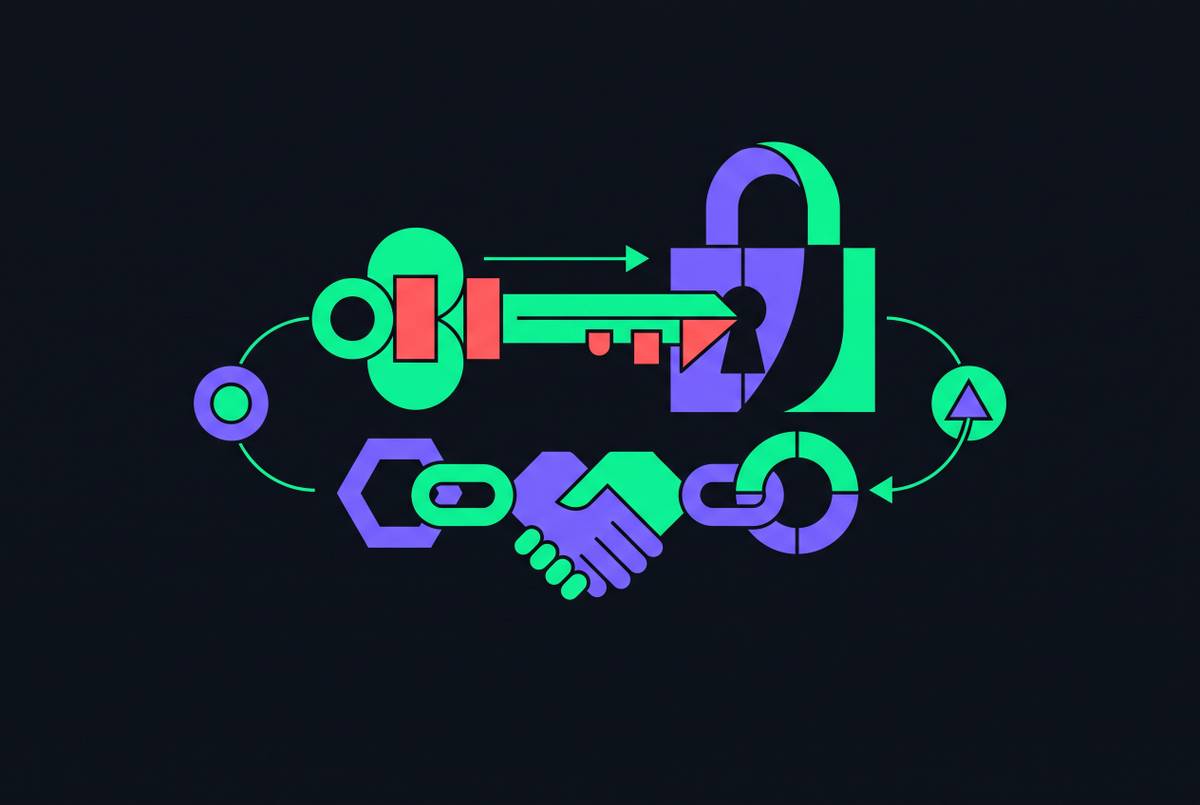
Three authentication patterns secure AI agents across user, unattended, and enterprise contexts.
Reuben Weldon
Section
18 stories in Agentic AI Foundations.
Three authentication patterns secure AI agents across user, unattended, and enterprise contexts.
Separating control and data planes is essential for securing enterprise AI agents.
AI agents need task-scoped credentials, not standing access.
CLI agents waste fewer tokens than MCP, but governance costs flip the equation at scale.
Plan tier, rate limits, and OAuth choice determine what agents can actually do in Notion.
Two protocols solve different layers of agent coordination in enterprise systems.
Unified traces across agent and MCP boundaries reveal hidden execution paths and costs.
Enterprises must extend SSO and SCIM to handle agent lifecycles that have no human departures.
Existing AI system inventories miss what agentic systems actually do.
Slack agents inherit enterprise access through a single click, bypassing security review.
Gateways enforce security that MCP left unbuilt; platforms add catalog and identity to the equation.
Adversarial prompting exploits blind spots in principle-based refusal at scale.
Platform engineering must evolve to govern AI agents with the same rigor it uses for humans.
Enterprises are deploying AI agents faster than security frameworks can govern them.
OAuth 2.1 replaces static keys with role separation, PKCE, and tokens bound to single servers.
Clarifying host and client roles prevents security gaps in agent governance.
OpenAI's Agents SDK lacks multi-user credential management that enterprises need at scale.
Role clarity determines whether an agent's power stays bounded or spreads through compromise.