MCP gateway and catalog platforms compared
Gateways enforce security that MCP left unbuilt; platforms add catalog and identity to the equation.
MCP gateways exist because the Model Context Protocol, on its own, enforces nothing. No built-in authentication, no rate limiting, no audit logging, no access control. Those are gaps written into the protocol itself, not bugs an engineering team can patch its way out of.
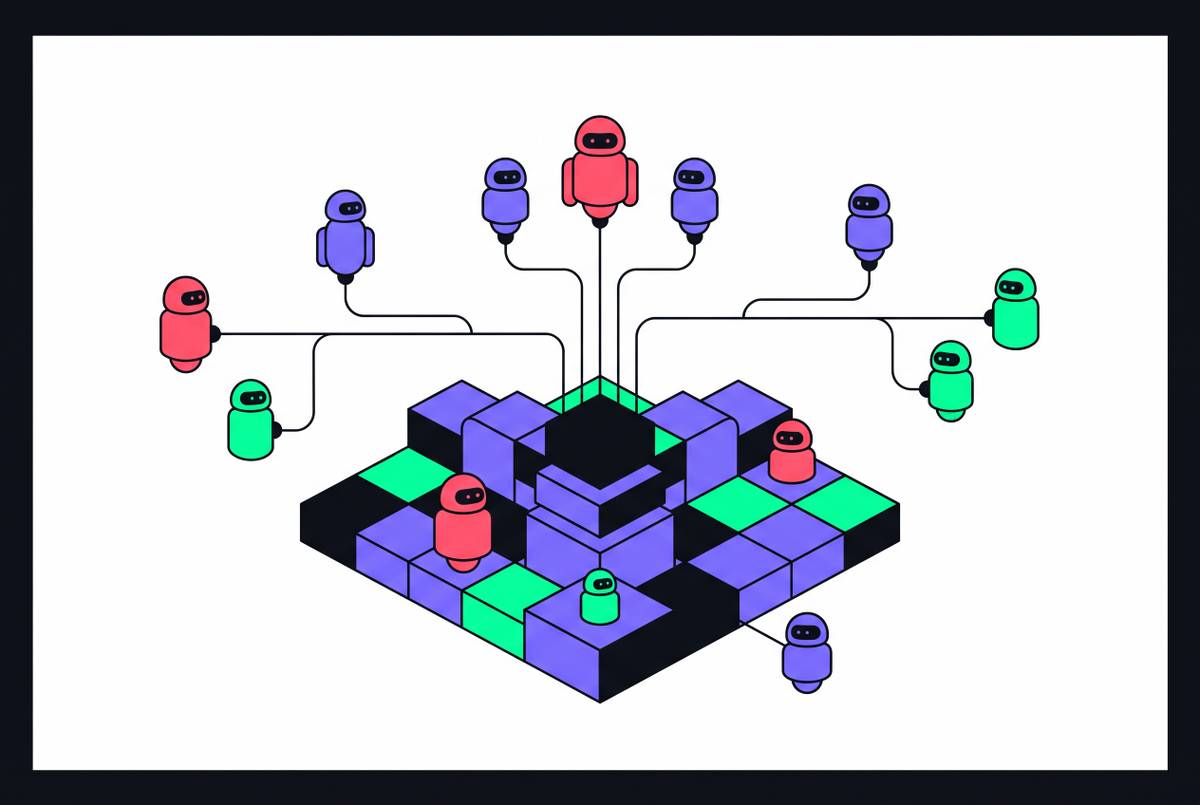
That matters because of how fast MCP spread. As agents multiplied and tools multiplied with them, companies ran into a scaling problem plain old math predicts: connect every agent directly to every server, and credentials, audit data, and policy decisions end up scattered across each individual connection. Security people call this the N×M problem. Ten agents and twenty tools means two hundred separate places a credential can leak, a policy can go unenforced, or an action can go unlogged.
The protocol itself hasn't held still long enough for most companies to build their own answer. MCP had a material spec release in July 2026 that reshaped core mechanics: stateless sessions, Enterprise-Managed Authorization, Dynamic Client Registration replaced by Client ID Metadata Documents, and server-to-client interactions narrowed to Multi Round-Trip Requests in place of the older out-of-band server-initiated patterns. A company that spent early 2026 building internal governance tooling against the spec as it stood then is now staring at a spec that moved out from under it. That's the most concrete reason enterprises are buying governance platforms rather than building their own: the target keeps moving faster than most internal roadmaps can track it.
The June 2026 Enterprise-Managed Authorization extension adds a second piece to that picture. It puts the enterprise identity provider in charge of deciding which MCP servers an employee can reach. A user signs in once through the company's existing IdP, Okta or Entra or whatever it runs, and that single sign-in becomes the basis for which MCP servers that person is cleared to use. It's a sensible model on paper. It's also one more piece of spec that a team building governance from scratch now has to implement correctly, on top of everything else the protocol left unsolved from day one.
The threat surface a gateway is protecting against
The attack surface tied to MCP is specific, and it's outgrowing what most enterprise security teams have built defenses for. A standardized risk framework gives these risks a name and a shared vocabulary, which matters because a threat nobody can name is a threat nobody budgets for.
Tool poisoning is near the top of that list. An attacker plants malicious instructions inside a tool's description or metadata, text the model reads as instructions but the human user never sees. The tool looks normal in any catalog listing. The danger lives in text nobody is reading.
Rug pulls work on a delay. A tool gets approved this week, then updates silently with different, malicious behavior next week, with no re-approval step and no alert firing. The identity check still passes because nothing about who owns the tool changed. What changed is the content running underneath it, and access control alone can't see that.
Credential aggregation turns a convenience into a liability. One MCP server holds credentials for several enterprise systems at once, so a single compromise doesn't cost an attacker one system. It hands over all of them.
Confused deputy attacks exploit ambient authority. When an MCP server carries broad permission scopes and no per-action authorization check, an attacker who can influence what the model sees can redirect that server's elevated privileges into unauthorized actions, without ever authenticating directly.
Token passthrough is a quieter failure. Instead of using OAuth 2.0 token exchange, some systems just forward an upstream token straight to a downstream tool call. A credential issued for one audience ends up reaching systems it was never meant to touch.
A credential hygiene problem produces much of this: most MCP servers still run on long-lived static secrets, API keys that are hard to rotate, easy to over-scope, and prone to spreading across projects once they exist. That's systemic risk sitting in plain sight in most deployments today.
Firewalls and static role-based access control were not built to catch any of this, because none of them can read the semantic content of a conversation that triggered an API call. They can confirm a caller has permission. They cannot tell you whether the request itself is a disguised attack.
Shadow MCP makes every one of these threats worse. An agent that runs a bash tool to execute a CLI command, or a Python script that calls a cloud API directly, never touches the gateway. Any gateway that only inspects traffic routed through it is blind to traffic that routes around it.
That split is the lens the rest of this comparison uses. Access governance answers one question: is this caller allowed to make this call? Runtime content security answers a different one: is what's actually flowing through this call safe? Tool poisoning, rug pulls, credential aggregation, and confused deputy attacks all live in that second category, exploiting gaps that conventional network tools were never built to inspect. Catching them takes inline analysis of tool call content, intent, and responses, which is a different engineering problem than deciding who gets a key.
The four dimensions that separate platforms from proxies
Most products in this market handle one or two of four dimensions a production deployment actually needs. A buyer who checks for feature presence rather than depth will miss exactly where their chosen platform stops.
The first dimension is gateway routing and transport. Does the product handle STDIO, HTTP, SSE, and Streamable HTTP? Can it aggregate several downstream MCP servers behind one endpoint, and does it hold up at acceptable latency once real traffic hits it?
The second is tool catalog breadth and distribution. How many managed connectors does the platform ship with? Can an internal API become an MCP tool without someone writing a custom server for it? And is adding a new tool something an employee can do themselves, or does every integration sit on an operator's to-do list? Distribution decides adoption in practice: a governed path nobody can find loses every time to an ungoverned shortcut that's one copy-paste away.
The third is identity enforcement tied to the enterprise IdP. Does every tool call resolve back to a real principal in Okta, Entra, or Google Workspace, or does it resolve to a key that only means something inside the gateway itself? A gateway-local identity is fine for a demo and a real liability the day someone leaves the company, because revoking a person in the directory does nothing to a key that lives somewhere else. Per-user OAuth passthrough, carrying the actual user's identity all the way to the downstream SaaS instead of handing the last hop to a shared bot account, is the test that separates real identity enforcement from access control theater.
The fourth is runtime security inspection. Does the platform look inside the content of tool calls and responses as they happen, checking for prompt injection riding in a tool result, sensitive data slipping out through an argument, or a pattern of abuse that only becomes visible across several turns of a session? Most gateways never get this far. They stop at dimension three.
These four dimensions split into two jobs: enablement, getting tools into agents' hands, and governance, controlling what agents do once they have them. A platform can be excellent at one job and nearly absent on the other, and the comparisons below are built to show exactly where each one lands.
Runlayer: unified enablement, control, and real-time security in one platform
Runlayer is built around the idea that a production-grade platform has to cover all four dimensions at once, rather than trading depth in one for strength in another. Enterprises increasingly want a single control plane instead of a patchwork of point solutions, each with its own audit trail and its own policy surface to maintain, and that's the organizing idea behind how Runlayer approaches credentials, distribution, and identity together.
On credentials, agents never hold a raw API key. Each operation gets a scoped, time-limited token instead, minted just in time and expiring right after use. That answers the problem described above: a majority of MCP deployments still run on long-lived keys that are hard to rotate and easy to over-scope.
On distribution, agent setup happens from Slack. The governed path and the easy path are the same path. Security and IT stop acting as gatekeepers standing between an employee and the tool they need, and start acting as the team that made the fast way also the safe way.
On identity, Runlayer's IdP-first model lines up with the June 2026 Enterprise-Managed Authorization extension almost exactly. A user signs in once through their existing enterprise identity, and the IdP handles provisioning which MCP servers that person is cleared to use, which is the same model the spec itself formalized.
Runlayer was founded by the team that built Zapier MCP and Agents, and it's backed by Khosla Ventures and Felicis. Its customer list includes Gusto, Instacart, Opendoor, and others running production agent workloads. Taken together, the combination of scoped credentials, frictionless distribution, and IdP-aligned identity is the case for Runlayer: not any single feature, but all four dimensions held at once, which is the thing most of the market still can't claim.
NeuralTrust TrustGate: runtime security inspection as the primary value
NeuralTrust TrustGate's case rests on one capability most access-governance-first gateways don't have: a Security Engine that reads the actual content of a tool call inline, rather than only checking whether the caller is permitted to make it.
That engine reasons across an entire session. An abuse pattern spread across several individually harmless-looking invocations is the kind of thing per-call access control simply can't see, because each step looks fine on its own. TrustGate's design assumes the threat often lives in the pattern, not the single request.
TrustGate also covers standard access governance: identity-aware policy, role-based access control, tool scoping, and audit logging. NeuralTrust's own framing of the market is direct about where it thinks the real differentiation sits. Catalog breadth is a convenience, not a security property, and the dimension most buyers underweight is runtime content security on tool calls, the exact gap a static RBAC check or a firewall rule can't fill.
Where TrustGate's coverage is less clear is catalog breadth, the depth of IdP passthrough, and whether its credential management matches task-scoped ephemeral tokens the way Runlayer's does. Buyers with heavy managed-connector needs, or an IdP-first provisioning requirement, should verify those specifics directly before assuming parity on dimensions outside TrustGate's stated strength.
TrueFoundry: Kubernetes-native platform with governance and compliance controls
TrueFoundry's strength is bundling RBAC, PII redaction, HIPAA and GDPR compliance controls, rate limiting, and budget controls into a single Kubernetes-native platform. For a regulated company that already needs those controls for reasons unrelated to MCP, folding MCP governance into the same stack is a real advantage.
Centralized observability, low latency, and enterprise-grade security sit alongside governance as stated design priorities, and TrueFoundry offers SaaS, private cloud or on-prem, and air-gapped deployment models as a proprietary platform. Its compliance log capability speaks directly to audit requirements, and full RBAC with compliance logging are both listed as first-class, not bolted-on, features.
TrueFoundry makes the most sense for a team already running it for model deployment and MLOps work, looking to add MCP governance without bringing in a separate vendor. It's less clearly the right fit as a general-purpose MCP security platform on its own. TrueFoundry is, fundamentally, an AI platform that happens to include an MCP gateway rather than a product built from the ground up around MCP-specific security. Nothing in the available material confirms runtime content inspection for threats like tool poisoning or cross-session injection, and the depth of IdP passthrough or credential lifecycle management at the task-scoped token level isn't confirmed either. A buyer evaluating TrueFoundry purely on MCP security grounds should ask about both directly.
Composio: managed connector breadth and developer speed
Composio's case is built on sheer catalog size: more than 500 integrations, unified authentication across them, and SOC 2 Type II certification. For a team trying to connect agents to a wide range of external tools fast, that breadth is hard to match.
The material around Composio consistently describes it as developer-first, built for speed, for getting agents wired up to external tools quickly rather than for deep governance review. SOC 2 Type II certification is a real, concrete compliance credential that matters in enterprise procurement conversations, and it's the kind of thing a security team can point to in a vendor review without having to take anyone's word for it.
What Composio doesn't confirm is runtime MCP-specific threat detection, task-scoped ephemeral credential management, or enterprise IdP provisioning at the depth the EMA spec calls for. A team whose top priority is integration velocity will find a lot to like here. A team whose top priority is security posture should weigh that gap honestly before treating connector count as the deciding factor.
Obot: self-hosted catalog and RBAC for teams that require infrastructure control
Obot is open-source and runs self-hosted, on Kubernetes, on Docker, or as a managed service, with a built-in curated catalog, composite server support, and multi-role RBAC out of the box. For a team whose compliance requirements demand full control over where data physically lives and flows, that self-hosted option is the whole point.
Admin runs compatible with infrastructure-as-code workflows, and identity ties into an existing IdP rather than inventing a separate login system. Composite server support lets several MCP servers get bundled into one logical endpoint, which simplifies what an agent actually has to be configured against, cutting down on the sprawl of individual connections a team would otherwise have to track by hand.
Being open-source means a security team isn't just told the policy engine works. They can read the code themselves, request changes, and verify directly how access decisions get made, instead of taking a vendor's documentation as the final word. For organizations where that level of inspection is a requirement rather than a preference, that's the deciding factor over any individual feature comparison.
Sources
- MCP's Rapid Journey from Open Door to a Fortified Gateway
- Agentic MCP Security Best Practices Guide
- auth0.com
- composio.dev
- glama.ai
- [2608.10760v1] A Gateway Architecture for Enterprise MCP Authentication: Unifying Heterogeneous Auth, Identity Delegation, and the User / Non-User Persona Problem
- Agentgateway out the gate with support for the 2026-07-28 MCP specification with release of version 1.4
- We Analyzed the MCP Security Landscape in 2026 — Here's What Every Gateway Needs - MCPProxy Blog