Versioning and Rolling Updates for MCP Server Tool Schemas
How to safely roll out breaking changes to AI tool schemas without silent failures.
A REST API that breaks throws a clear error code. An MCP tool schema that breaks does something worse: it keeps running, and the model that calls it hallucinates an argument, misroutes to the wrong tool, or quietly skips a step it used to handle correctly. That difference in failure mode is the whole argument for why versioning discipline matters here more than it does for ordinary APIs.
Agents find tools through how they discover the tool catalog, by calling tools/list, and under the 2026-07-28 MCP specification, that discovery happens statelessly: sessions were removed, so there's no fixed moment at connection time when a client locks in what it knows. There's no compiled binary, no build artifact, nothing a CI pipeline can check the new schema against before the call goes out.
The binding is also semantic, not just structural. The contract an agent binds to includes the natural-language sentences describing the tool as well as the JSON shape underneath them. That inverts the standard API versioning assumption in two directions at once. The caller is a model, not a developer reading a changelog. And the code the model writes to call that tool is ephemeral, generated fresh each time, never checked against a new schema version the way compiled client code would be. Security-conscious deployments feel this acutely: a client that keeps an allowlist of permitted tool names by exact string match will simply stop routing calls to a renamed tool, with no error thrown anywhere in the stack.
Breaking changes in an MCP tool schema
The list of changes that break an MCP tool is longer than most engineering teams assume, because it includes semantic edits to natural language fields alongside the structural edits everyone already watches for.
Some changes are breaking in the way any API engineer would recognize. Promoting an optional field to required does the same thing in reverse. These are the changes a JSON schema diff will catch every time.
Other changes are safe and don't need a new version. Adding a brand-new tool, without touching any existing one, changes nothing for current callers.
The third category is the one that catches teams off guard. Structurally, nothing changed in these cases, so none of it shows up in a schema validator or a diff tool. The only evidence is a shift in how the model behaves over time.
The 2026-07-28 specification adds a fourth wrinkle to this taxonomy. Moving a rule out of prose and into a structural constraint sounds like cleanup. For any caller whose model had been inferring that rule from the description alone, it's a breaking change, because the model's understanding of the tool just shifted out from under it.
How the 2026-07-28 specification changes the versioning surface area
The 2026-07-28 release, which its maintainers describe as the largest revision since the protocol launched, widens what a tool schema can express and redraws what counts as a protocol version. Teams now have to track three separate surfaces at once, not one.
The first surface is the wire protocol version itself, the date-based identifier like 2026-07-28 or 2025-11-25. Under the new stateless model, that version travels on every single request via the io.modelcontextprotocol/protocolVersion key in _meta, mirrored into the MCP-Protocol-Version header on Streamable HTTP. The second surface is the tool's own input and output schema, now expressed in full JSON Schema 2020-12. The third is the application contract: the actual behavior and side effects behind a tool call, which can shift even when neither of the other two surfaces moves.
The stateless redesign changes the mechanics of all three surfaces. Negotiation now happens request by request: if a client sends an unsupported version, the server returns UnsupportedProtocolVersionError (-32022) along with a list of versions it does support, and the client retries.
Any caller that assumed a tool's output would always be an object can break the moment a tool takes advantage of that new freedom.
Alongside all of this, the spec introduces a formal deprecation policy for the first time. Every feature now moves through an Active, Deprecated, and Removed lifecycle, with a minimum twelve-month window between deprecation and the earliest point removal is allowed (a security advisory can shorten that window, but never below 90 days). Anything deprecated as of July 28, 2026 can't ordinarily be pulled before July 28, 2027.
Why schema changes fail silently in production
Silent breakage persists because the failure doesn't look like a schema problem from the outside. A model that misroutes a call, hallucinates an argument, or skips a step reads as a model quality issue to whoever's watching, not as a contract change, and it falls completely outside the error surface that API monitoring was built to catch.
Clients with strict, security-conscious allowlists that key on exact tool-name strings will quietly stop routing to a tool the moment it's renamed, with zero errors raised anywhere. Semantic changes are worse still, because a reworded description produces no JSON diff. Schema diffing tools, CI validation, API gateway inspection: none of them see anything, because nothing in the structure moved. The only available signal is a slow drift in how the model behaves, which takes time to notice and is genuinely hard to trace back to a cause.
The audit trail has a gap of its own. Schema version is a fourth dimension sitting alongside those three, and most audit systems were never built to record it.
None of this is a flaw that crept in by accident. It reflects a working assumption, carried over from the API world, that the contract behind a tool call is stable once published. Disciplined versioning exists to make that assumption true again.
Side-by-side versioning as the foundational rollout pattern
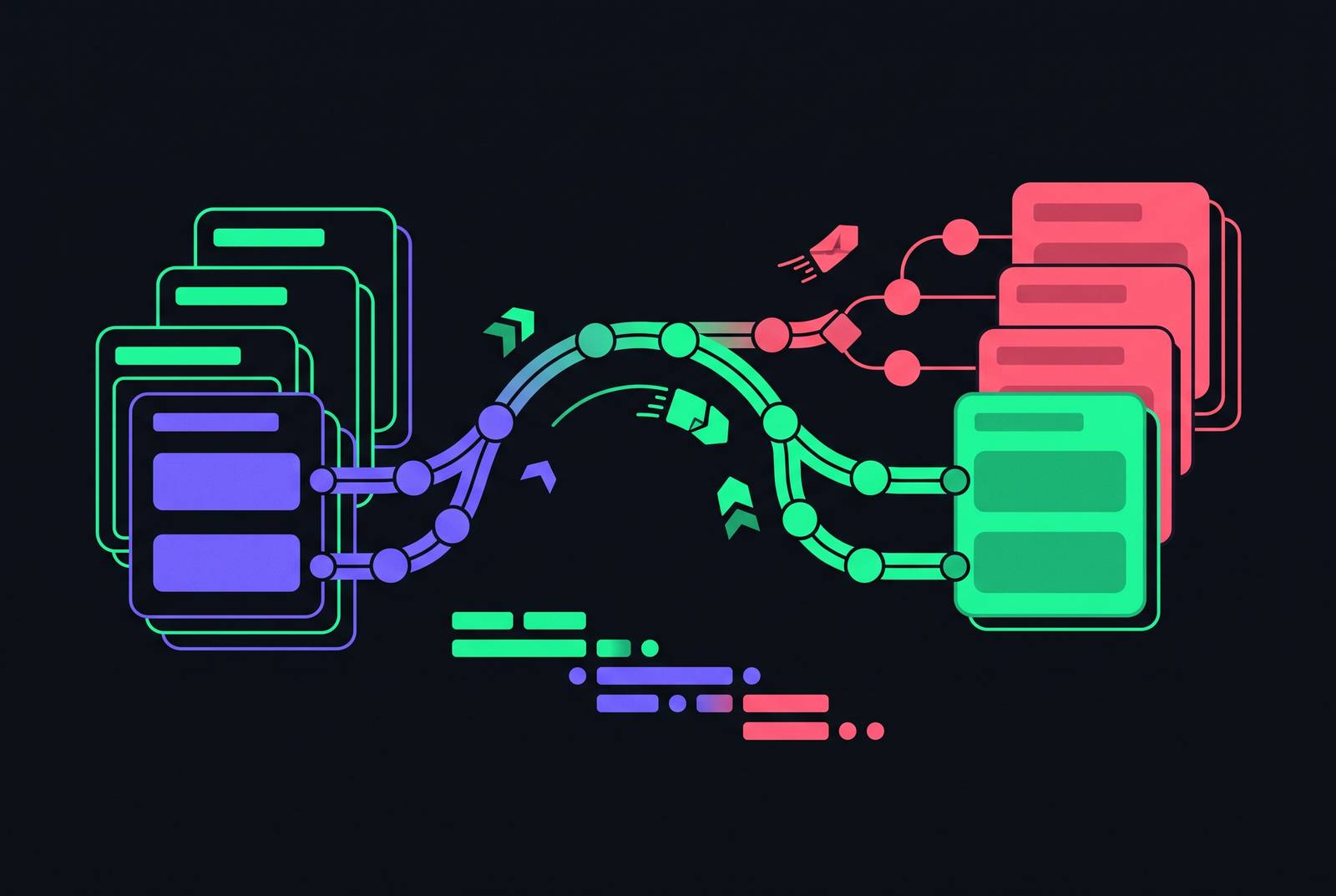
The core pattern for shipping a breaking schema change without an incident is to publish the new version as its own distinct tool alongside the old one, leaving the live tool in place. Editing in place is the path most teams take by default, and it's the reason a one-line schema change turns into a production incident.
Side-by-side versioning means the new schema ships under a new name, something like get_weather_v2 next to get_weather, or under a versioned namespace. Each client then migrates on its own schedule. Nothing forces a cutover the moment the deploy goes out. The old tool keeps running and keeps getting monitored for as long as the migration window stays open, and it gets removed on a schedule, not the instant the new version ships.
In-place editing fails for a structural reason tied directly to how the stateless protocol works. There's no session boundary left at which a client can be told "the schema changed, go re-read the catalog." A client holding a cached tools/list response, valid for as long as its ttlMs says it is, keeps calling the old shape until that cache expires on its own. If that client sends v1-shaped arguments to a server now expecting v2, the server either accepts them anyway (if it's lenient) or rejects them (if it's strict), but in neither case does the client get told the schema moved out from under it.
The dual-era WordPress adapter is a working example of the namespace approach: 2026-07-28 and 2025-11-25 run side by side in the same installation by keeping the wire contract, the library contract, and the application contract versioned independently of one another.
Deprecation also needs to be signaled the moment the new version goes live, and the only channel available for that right now is the deprecated tool's own description field. The 2026-07-28 lifecycle policy, Active to Deprecated to Removed with its twelve-month minimum window, gives server operators a governance structure to hang tool-level deprecation schedules on. Every call to the deprecated version should still get logged, so the decision to finally close the migration window rests on observed traffic.
Canary rollouts and traffic gating for tool schema updates
Publishing the new tool alongside the old one gives each version a distinct name, but routing all traffic to the new version at once still throws away the chance to catch a behavioral regression before it spreads. That's the gap canary rollouts close.
The pattern itself is simple. Route a small slice of traffic, five percent for example, to the new tool version while most clients stay on the stable one. And monitoring has to look past error rates alone: a canary tool that throws zero 4xx errors but returns a structurally different output shape is still a regression, even though nothing in the logs says so directly.
Rollback has to be built in from the start. Without a tamper-proof record of version changes and rollbacks, there's no way to reconstruct after the fact which schema version an agent was actually calling against at a given moment.
The Mcp-Method and Mcp-Name headers introduced in 2026-07-28 make this routing tractable at the infrastructure level. Setting it too high stalls the rollout for however long that cache stays valid.
Identity, credential scoping, and the permission surface that versioned tools expose
Every new tool version published during a migration is also a new permission boundary, and if credential management doesn't move at the same pace as the versioning cadence, side-by-side schemas turn into a way of accumulating shadow access rather than staging a controlled rollout.
MCP servers commonly sit in front of credentials for several enterprise systems at once, behind a single tool interface. The authorization hardening in the 2026-07-28 spec, which brings MCP closer in line with how OAuth 2.0 and OpenID Connect are deployed in practice, makes each new tool version a natural checkpoint for tightening that scope.
The safer default for tool calls is an ephemeral, task-scoped credential. When it calls a tool, an identity gateway evaluates the intended outcome and the specific tool being invoked, then issues a credential scoped to that one task, which expires once the task finishes. That design also makes rollback safer: pulling a canary tool version revokes the ephemeral credentials tied to it automatically, instead of leaving long-lived tokens that need manual cleanup.
A documented case from 2026 makes the stakes concrete. A tool schema that accepts an unvalidated path argument carries an implicit permission nobody ever declared, and that permission would have survived into a new version unless the migration tightened the input schema and the credential scope together, as a single decision.
The Enterprise-Managed Authorization extension, which reached stable status in June 2026, formalizes a different model for handling this at scale. Under that model, publishing a new tool version becomes an event the identity provider records and provisions, not a change that happens quietly on the server side where nobody's watching.
A production-ready versioning governance model end to end
A mature versioning model for MCP tools is a pipeline connecting schema publication, traffic routing, credential scoping, and audit logging into one lifecycle that can be traced from draft through deprecation to final removal, built into the deployment from the start rather than layered on as naming conventions afterward.
That pipeline runs in stages. Traffic gets gated to a small percentage of internal or trusted clients, with both versions monitored for behavioral differences, not just error codes, while the canary runs. Based on what that monitoring shows, the rollout moves to 100 percent or drops back to zero, and that decision, along with the evidence behind it, gets written to a tamper-proof audit record. The predecessor tool gets marked deprecated in its own description, every call to it keeps getting logged, and a removal date gets set, matching the twelve-month minimum window the 2026-07-28 policy establishes as the baseline. Removal happens once observed traffic hits zero or the removal date passes, whichever comes later, and that removal itself gets logged too.
The audit record needs a specific minimum set of fields on every tool call: tool name, tool version, protocol version pulled from the MCP-Protocol-Version header, the agent's identity, the account identity it's operating under, and a timestamp. That's the floor needed to reconstruct, after the fact, what schema an agent was calling against during any given window. Tamper-proof logging and full tracing through something like OpenTelemetry are the infrastructure this requires, and they're not something the MCP protocol provides on its own. They're a property of whatever platform sits around the protocol and governs it.
Without that platform, the pipeline tends to fracture into four separate systems: schema versioning managed in the server code, canary routing handled in the API gateway, credential scoping kept in a vault, and audit logging sent to a SIEM. All four have to update in lockstep for every single tool version change, and the gaps between them are exactly where schema versions drift out of sync, credential scopes go unreviewed, and rollback events never make it into the log. A unified control plane, one that enforces policy at the level of each individual tool call, ties identity to every action through single sign-on and just-in-time credentials, and keeps one audit trail across all three surfaces at once, closes those gaps structurally. That's a stronger guarantee than process discipline alone can offer, because discipline depends on every team remembering to do the right thing every time, and a structural fix doesn't.