RBAC Design for MCP Tool Access in Regulated Enterprises
Enterprises must build RBAC into MCP deployments to meet compliance requirements.
MCP's lack of a built-in authorization system is intentional design, not a bug waiting on a patch. Every enterprise that adopts the protocol inherits a blank canvas where access rules should be, and has to draw those rules in itself. What follows is a practical account of how to do that: how to build role-based access control for MCP tool calls that actually holds up in a regulated environment.
The official MCP spec states that the protocol "cannot enforce these security principles at the protocol level," which puts the entire burden of deciding who can call which tool, under what conditions, onto whoever operates the deployment. MCP standardizes how an agent reaches a tool. MCP says nothing about whether that agent should be allowed to reach the tool. The 2026-07-28 spec update made this more pointed, not less: responsibilities that used to sit with protocol-level session management shifted onto server operators. The implementation burden on enterprises went up as a result.
Most operators have not filled that canvas with much. Only a small share of MCP servers use OAuth today; the remaining 91.5% run on static API keys sitting in.env files, mcp.json configs, and plain environment variables. These keys don't expire, don't scope to a specific task, and don't rotate on any schedule. A key that grants full access to a system on day one still grants full access a year later, whether or not the person who set it up still works there.
A common response to this is that OAuth 2.1 is now written into the spec, so the authorization gap is closing on its own. That doesn't hold up. OAuth handles authentication and it handles broad scope grants, confirming that a given client can talk to a given MCP server at all. It has no standardized way to say which specific tools that client can use once it's inside. That narrower, harder question, tool by tool, is exactly where role-based access control has to do the work OAuth was never built to do.
What flows through the authorization gap
The authorization gap is an active exploitation surface, with documented incidents and measurable attack success rates recorded through 2026, as the incidents below show.
Start with over-privileged access. When a customer support agent carries the same credentials as a database administrator, a single compromise reaches the whole database, not just the support queue, and the damage any attack can do scales directly with how much access the agent was given. The Supabase incident shows this mechanism directly: an agent ran with privileged service-role access while processing inputs an attacker controlled, and it was that privilege level, not some separate flaw, that let integration tokens get pulled out. A read-only agent scoped to support data alone could not have produced the same result, because the access simply wouldn't have reached that far.
Tool poisoning works on a different mechanism but lands on the same lesson. Agents read tool descriptions with roughly the same trust they extend to their own system prompts, so a malicious or compromised server can bury instructions inside a description, and the model follows them without flagging anything unusual. The MCPTox benchmark tested adversarial versions of 353 real tools pulled from 45 live MCP servers against 20 different language models, and found a meaningful average attack success rate across the board, with the highest rate reaching a substantial majority of attempts against one leading reasoning model. Invariant Labs showed the same class of attack against Claude Desktop in practice, pulling private repository source code out through a poisoned GitHub issue processed by the GitHub MCP server. Microsoft's Defender research team documented a finance-team version of this: an approved third-party invoice enrichment tool got updated with its visible name and summary left untouched, while malicious instructions were hidden inside the description text. MCP picks up description changes automatically, and any setup without a re-approval step lets that kind of poisoned update go live with nobody reviewing it. RBAC enforced at the level of the individual tool call does more than decide who gets to call a tool. It creates the checkpoint where a signed tool definition or a pinned version can be verified before the call is allowed to proceed.
Supply chain exposure adds a third mechanism. CVE-2025-6514 is a critical OS command injection vulnerability in mcp-remote, an OAuth proxy with hundreds of thousands of downloads used in integrations across Cloudflare, Hugging Face, and Auth0. A malicious MCP endpoint could send a crafted authorization URL that mcp-remote passed straight to the system shell, which gave an attacker remote code execution and a path to API keys, cloud credentials, local files, and SSH keys. That single flaw in one widely-used piece of plumbing shows how far a compromise can travel once it's inside a system with no internal boundaries to stop it.
Then there's the audit blind spot. When an MCP server reads thousands of customer records and forwards them to an outside endpoint, most deployments keep no record of it at all: no log of which agent called which tool, what parameters it sent, what data came back, or whether the server's behavior even matched what it was approved to do. This is the single biggest reason MCP security incidents are so hard to investigate after the fact.
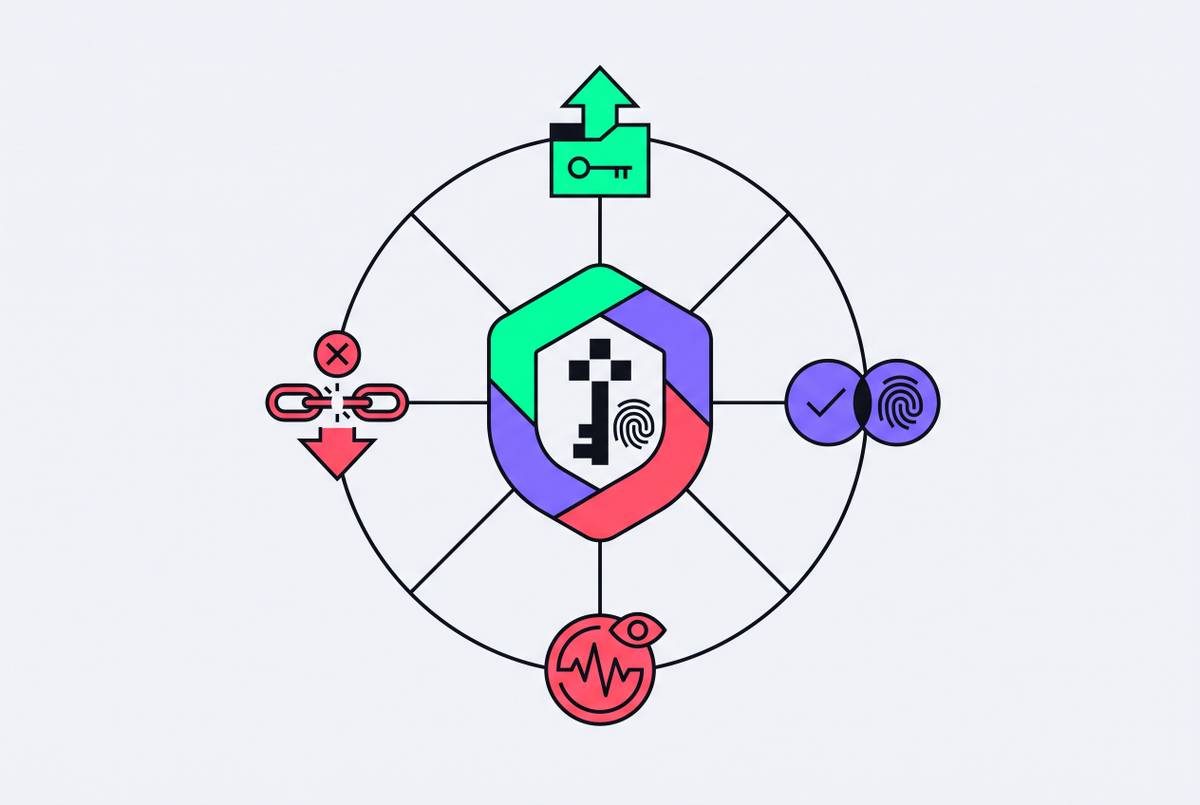
Laying these four failure modes side by side reveals a pattern. Each one either exploits access that was broader than it needed to be, slips past detection because nothing was checking at the level of the individual tool call, or leaves behind no trail for anyone to follow afterward. They are the three properties that well-designed RBAC provides by default, and the four incidents above are what happens, concretely, when an enterprise goes without them.
Regulated industries face a harder version of this problem
For a regulated enterprise, this gap isn't just an operational weak point. It creates legal exposure, because compliance frameworks have started treating AI agents as identifiable actors bound by the same identity governance rules that already apply to human employees.
Regulators are carving agents out as their own category because agents carry credentials and act at machine speed, and that puts them squarely in the path of AI-specific law like the EU AI Act, data protection regimes such as GDPR and CCPA, and identity governance rules that were written with people and static service accounts in mind. None of those frameworks anticipated a non-human identity that inherits a builder's access and then acts on behalf of whoever invokes it.
The EU AI Act gives this a real calendar. Under the Digital Omnibus on AI, signed in July 2026, high-risk obligations take effect from December 2, 2027 for stand-alone high-risk systems and from August 2, 2028 for AI embedded in regulated products. That covers AI used in employment, education, critical infrastructure, and essential private and public services and benefits, which puts a large share of regulated-industry MCP deployments on the clock.
Two specific provisions matter for how access gets designed. Article 14(4)(e) requires that the people responsible for human oversight of a high-risk AI system be able to intervene in it or halt it through a stop mechanism that brings the system to a safe state. That requirement only works if the agent's access is bounded and revocable in the first place: a kill switch means nothing against an unscoped static credential that keeps working no matter what gets switched off. Article 19 sets a separate requirement, a minimum six-month retention period for automatically generated logs on high-risk systems, unless other Union or national law requires something stricter. The audit blind spot that most MCP deployments currently run with is a direct violation of Article 19 for any regulated enterprise operating a high-risk system.
These two provisions set the benchmark the rest of this piece is built against: bounded, revocable access, and a complete record of every tool call. Both are design requirements RBAC has to satisfy, not optional extras layered on afterward.
RBAC for MCP tool access
Server-level access control answers only one question: can this caller reach the server. That's a coarse gate, and it's not the question that matters most. Tool-level RBAC answers a sharper one: once a caller is inside the server, which specific actions can it actually take. Those are two different layers of control, and conflating them is where a lot of MCP deployments go wrong.
RBAC at this depth goes further than OAuth 2.1 can reach on its own. OAuth handles authentication and grants broad scope, confirming that a given client may access a given MCP server. There's no standardized convention inside OAuth for individual tool permissions, so RBAC has to fill that space with explicit, per-tool decisions about what each caller is and isn't allowed to do.
Governance also needs to operate at two separate layers, and treating them as one is a common design mistake. The other is runtime access control: which models, which budgets, and which MCP tools a given caller is allowed to use at the moment it tries to use them. Getting admin roles right still leaves every actual tool call unguarded.
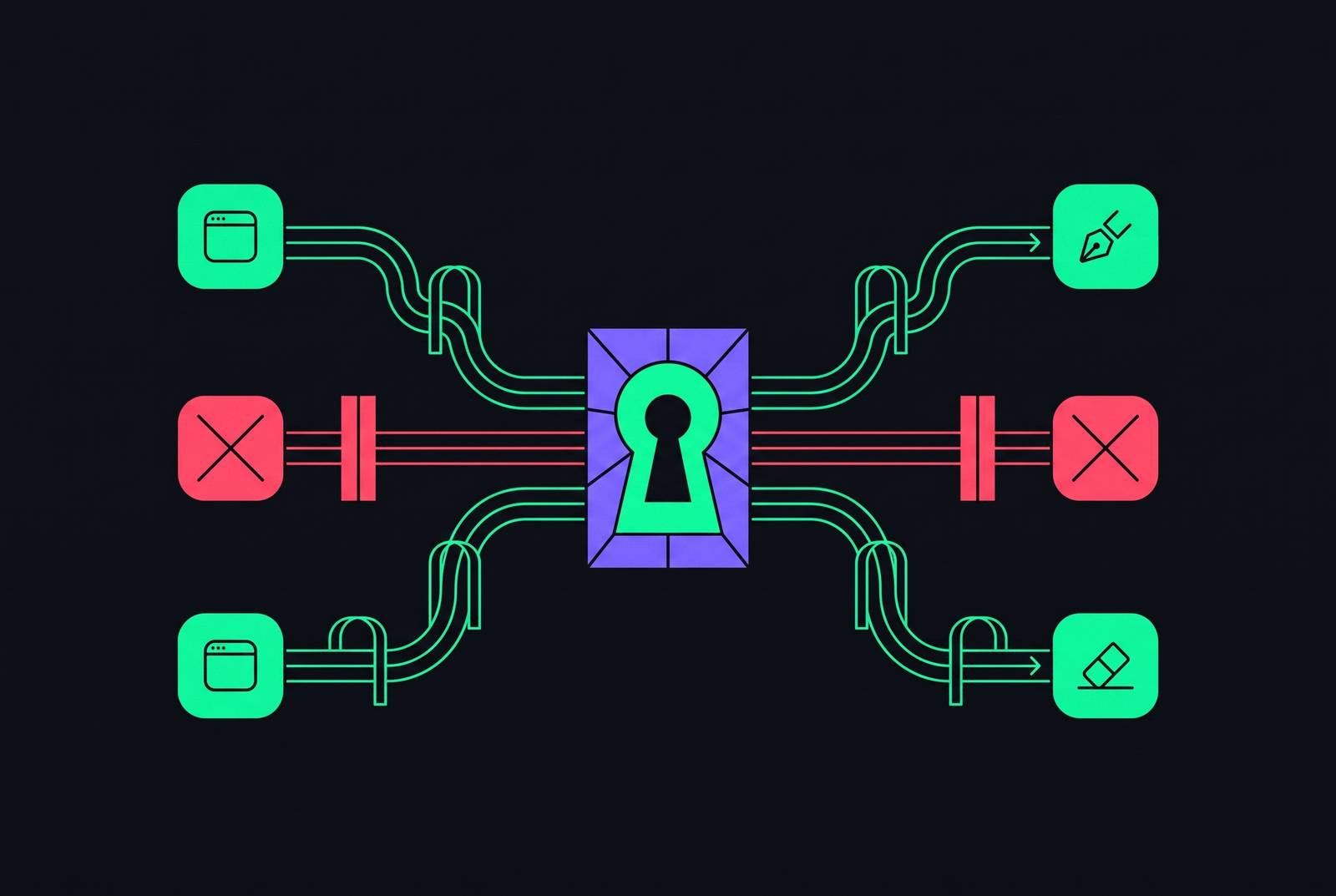
The gateway is the right place in the architecture to put RBAC policy. A policy change made at the gateway applies to every client immediately, with no need to redeploy individual servers, while policies embedded inside the servers themselves can't be kept consistent once a deployment grows past a handful of them. A complete implementation needs four pieces working together: a centralized catalog that lists every approved MCP server along with its metadata, owner, approval status, and access scope; SSO combined with RBAC, so identity-based access through the enterprise identity provider carries tool-level permissions enforced right at the gateway; structured audit logging that produces a tamper-evident record, in JSON, for every single tool call; and real-time enforcement that can block, mask, or rate-limit a call before it runs, using policy engines like Cedar or OPA alongside SQL sanitization, prompt injection detection, and secrets detection.
None of this is arbitrary. The NCCoE concept paper, published February 5, 2026, recommends that enterprises treat AI agents as identifiable entities inside their existing IAM systems rather than as anonymous automation running under shared credentials. That single shift in framing, agents as identities rather than as invisible processes, is the foundation everything else in this piece builds on.
Building a role taxonomy that maps to how agents operate in regulated environments
An effective role taxonomy separates human roles, which govern who configures and approves access, from agent identities, which govern what a given agent is authorized to do once it's running. Both sides of that split need to be scoped down to the minimum access the task genuinely requires, and neither should borrow slack from the other.
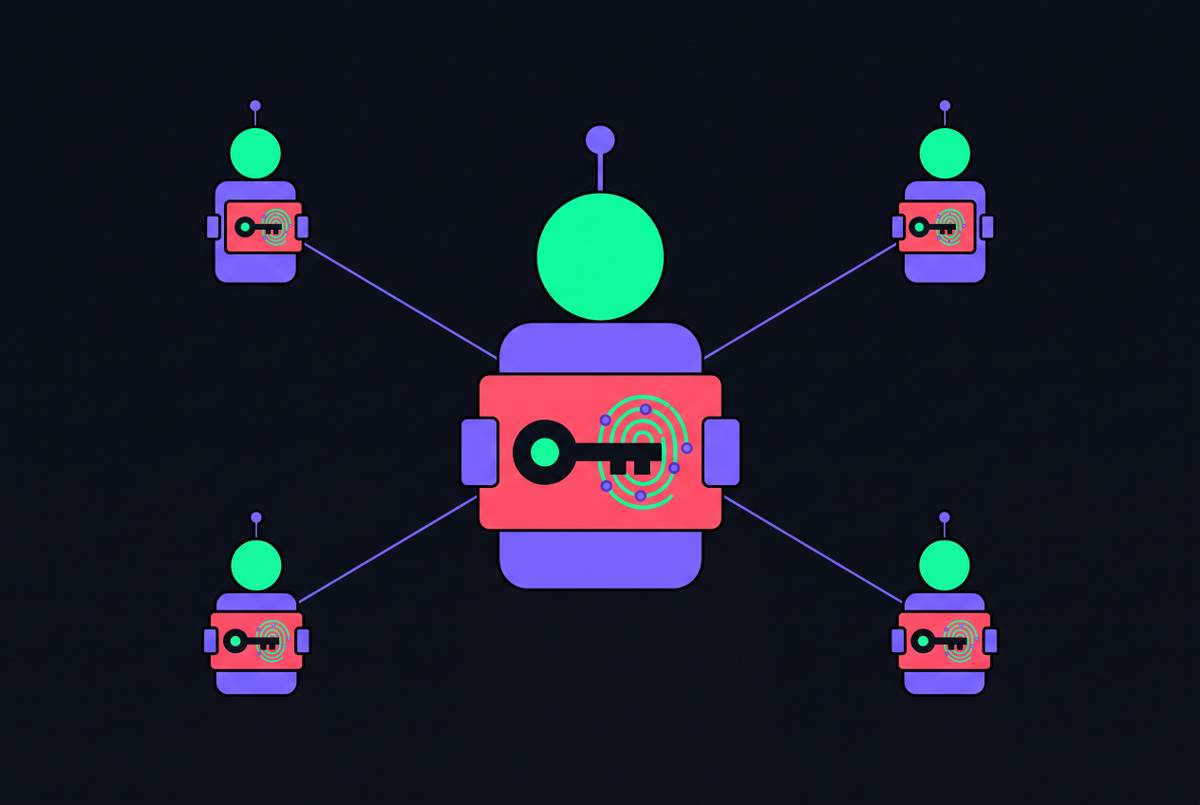
Traditional identity systems were built around humans and static service accounts, and that model doesn't carry over cleanly to agents operating inside a multi-agent architecture. Agents need identities that can be created just-in-time for a specific task, handed a bounded and clearly defined set of permissions, and revoked the moment the task is done. Practically, that means an agent should never inherit a human's credentials and should never be handed a broad, long-lived API key. Each agent deployment should get its own enterprise-grade identity, scoped tightly to what its specific job requires, time-limited wherever that's feasible, and revocable on its own, independent of whatever human account happens to be connected to it.
On the human side of the taxonomy, a team or application owner needs the ability to configure which tools their team's agents can reach, but only within servers that have already been approved, and only inside their own namespace, not anyone else's. An end user, by contrast, should be able to invoke an agent through an approved surface, a tool like Slack is a common example, without having any ability to change tool access or policy settings themselves; the agent acts under that user's identity, but the user isn't the one setting the rules it operates under.
On the agent side, each distinct workflow should get its own identity, scoped to exactly the tools that workflow needs and nothing past that. A support summarization agent needs read access to the ticketing system. It has no business holding write access there, and it should have no access at all to a billing tool, because nothing in its job touches billing.
This is where most deployments actually fail, and the failure is rarely malicious. Research into MCP servers found that a large majority require some form of credential, but far fewer actually scope that credential down to the minimum the task needs. That gap comes from developer convenience, from the natural pull toward a single broad key that just works everywhere instead of a dozen narrow ones that each have to be configured correctly, and convenience of that kind turns into exploitable surface area later.
Just-in-time credential provisioning is what makes tight scoping practical to run at scale instead of just on paper. When a user authenticates through single sign-on, access profiles tied to their role automatically provision scoped virtual keys for that session, and any change made to an access profile takes effect immediately across every key tied to it, with no need to rotate credentials by hand. That mechanism is what lets a role taxonomy stay enforceable as an organization adds more agents, more tools, and more regulated workflows, rather than decaying back into the static, over-permissioned keys this entire structure was built to replace.