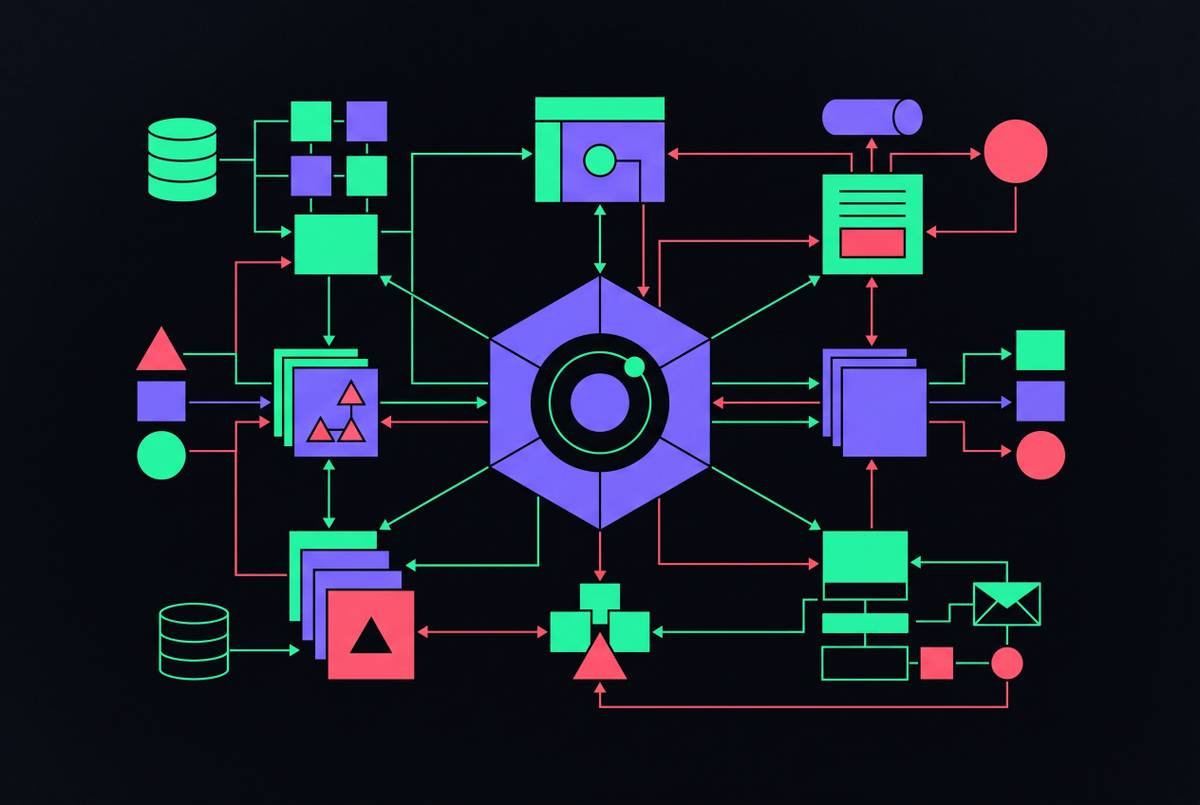
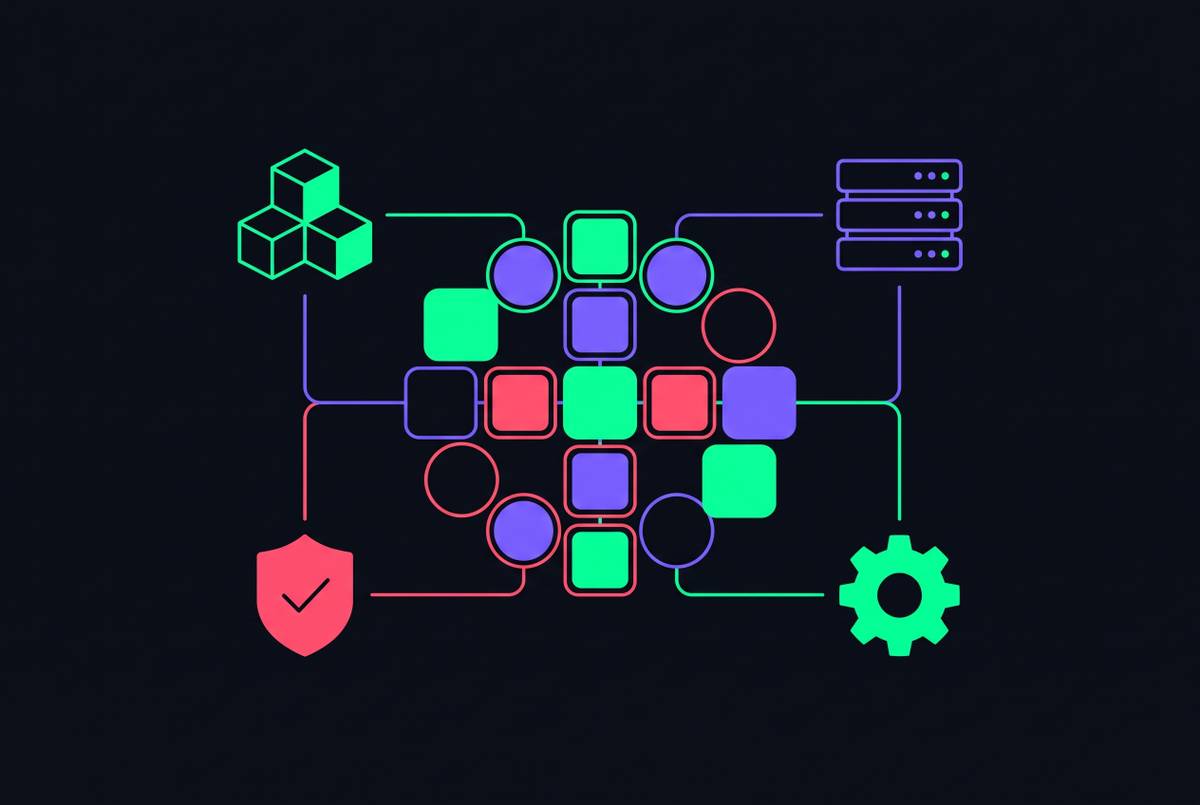
Local MCP Server Development and Debugging Workflow
Building MCP servers requires fundamentally different security practices than traditional APIs.
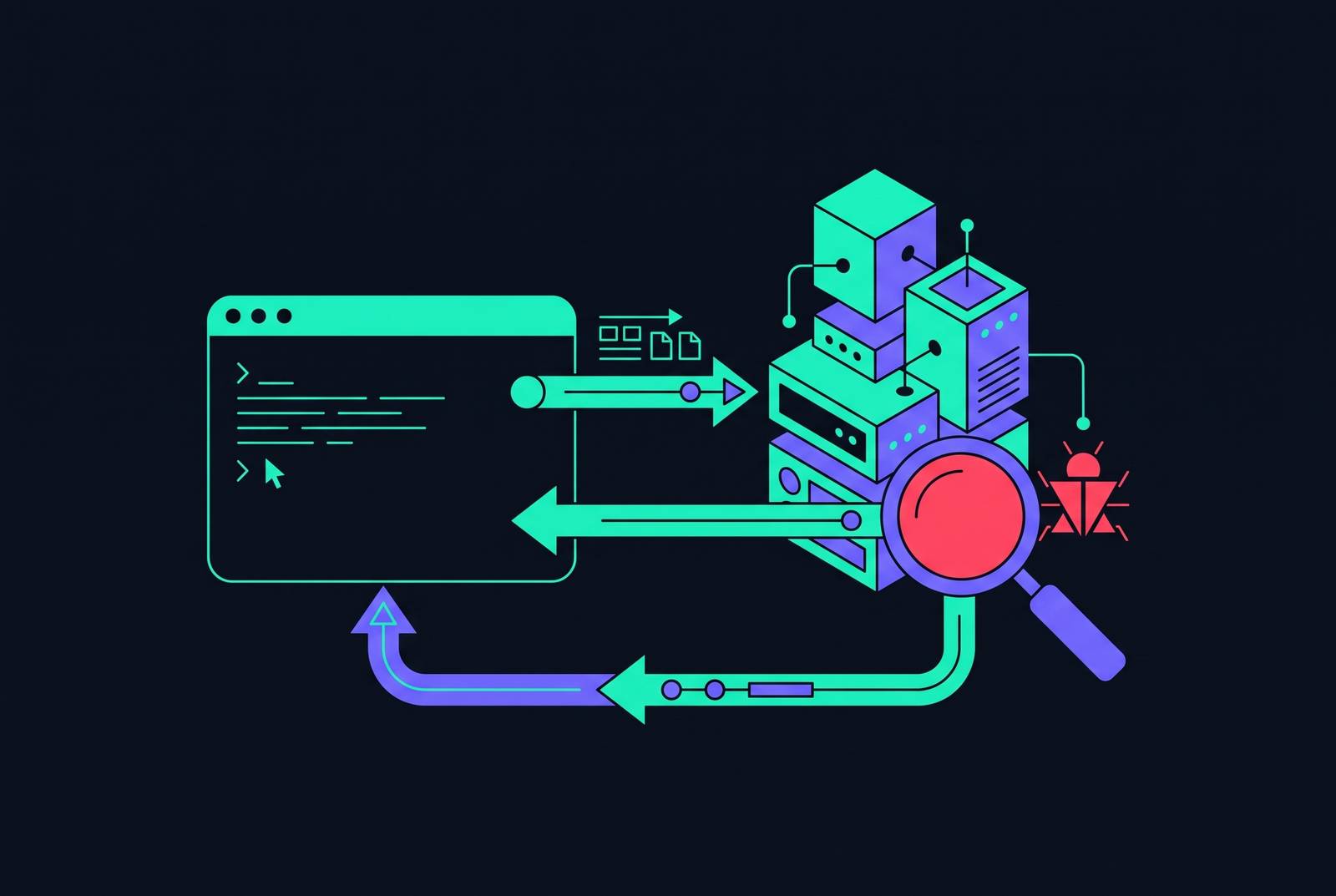
Local MCP development is not ordinary API work. The protocol makes the server an active participant that can instruct the model it serves, and it ships without built-in authentication. The security choices you make while building and debugging on your own machine become the foundation of the server you eventually hand to someone else.
Why MCP servers are a different kind of security problem than ordinary APIs
MCP servers invert the client-server relationship you have spent your career learning. A standard REST API waits for a request, validates it, and returns data. It exposes tools, writes to the model's context, and shapes what the model believes and does next. That single design choice is why every major attack class traces back to the same root: the protocol trusts the server to act and trusts the client to accept what comes back.
The consequence for developers is structural. SAST, SCA, and standard API security checklists miss MCP-specific risk by design. Scanners don't read tool description metadata, so they can't see malicious instructions hidden there.
The protocol also lacks built-in authentication or authorization. Every server deployed inherits whatever permissions it is granted. Unless you add controls externally, every agent request gets through. This is not a configuration gap. It is a design choice. So the habits you bring from REST work will miss the problems that matter here.
The threat categories a local MCP server is actually exposed to
The attacks that hit MCP servers are not exotic AI-native exploits. They are classic vulnerability classes in new uniforms, and most of them are exploitable in a local development environment. Tool poisoning sits at the top of the list. A malicious or compromised MCP server embeds hidden instructions in a tool's description or metadata. Invariant Labs demonstrated two concrete paths: a prompt injection attack via a malicious GitHub Issue exfiltrated private repository data from Claude Desktop, and a separate attack stole SSH keys from Cursor IDE.
Prompt injection via content is the same principle, but it arrives through external data. This is the confused deputy problem, ranked MCP06 as Intent Flow Subversion in the OWASP MCP Top 10. A self-audit of pdf-mcp, a server with thousands of downloads, found it present and undetected.
SSRF is the next category. A URL-fetching tool that accepts any input without validation can be pointed at cloud metadata endpoints to retrieve credentials. The fix requires resolving hostnames to IPs before connecting and validating against private ranges, failing closed if DNS resolution fails, and re-validating after redirects.
Path traversal and unrestricted file access follow. If you don't enforce file extensions or resolve symlinks, a symlink inside an allowed directory can point to sensitive system files. Anthropic's own Filesystem MCP Server carried this exact class of vulnerability, tracked as CVE-2025-53109 and CVE-2025-53110.
Resource exhaustion is easy to overlook. The pdf-mcp audit found it in max_pages, max_results, and context_chars. The fix is hard clamping, not rejection, so the tool remains functional.
Supply chain and rug pulls are a developer-facing risk. A server can look safe during review but act maliciously later. Between January 23 and 26, researchers identified exposed OpenClaw instances on the public internet with unauthenticated MCP endpoints leaking Anthropic API keys, Slack credentials, Telegram bot tokens, and complete chat histories.
SDK-level vulnerabilities are now a standing category. It affected versions 1.10.0 through 1.25.3 and was fixed in 1.26.0. The mcp-remote npm package, CVE-2025-6514 at CVSS 9.6, passed authorization endpoint URLs into an OS command launch without sanitizing their username and password components.
Local-to-remote exposure rounds out the list. Anyone on the same network can connect and execute commands. This misconfiguration appears in many MCP server implementations.
How the authentication gap shapes every local development decision
The MCP specification's authentication model means local stdio servers and remote HTTP servers operate under entirely different trust assumptions. Conflating the two is the most common source of credential exposure in development. The July 28, 2026 spec revision is the most significant structural response to date. MCP servers are now formally OAuth 2.1 resource servers and must implement OAuth 2.0 Protected Resource Metadata, RFC 9728, so clients can discover the correct authorization server automatically. That takes HTTP server authorization from something you could wire yourself to something that works when you follow the RFCs.
Local stdio servers get a different instruction. The MCP specification says stdio implementations should not follow the HTTP authorization specification and should retrieve credentials from the environment. So the boundary is how you configure clients and handle secrets, not OAuth flows.
What this means in practice is concrete. Credentials live in environment variables,.env files, or shell config. Those become the attack surface. A compromised server with that level of inheritance has immediate access to cloud infrastructure.
There is also the non-human identity problem. There is no clean way to scope, review, or revoke their access independently. A local dev server under a developer's own credentials has the same problem.
Setting up a local MCP development environment with security defaults in place
The choices you make during setup, transport type, SDK version, credential handling, and network exposure, determine whether security is structural or bolted on later. Transport selection is the first decision. Stdio runs the server as a subprocess of the client, communicating via stdin and stdout. It is appropriate for local development and CLI tools. Streamable HTTP arrived in the March 2025 spec update and is now the standard for remote-accessible servers. Do not build new servers on SSE.
Local HTTP servers risk network exposure if misconfigured. Binding to 0.0.0.0 instead of 127.0.0.1 opens the server to anyone on the same network. This one line can be the difference between a private tool and an open door.
SDK version hygiene is next. Verify the installed version before use. With more than 30 CVEs filed across Python, TypeScript, Java, and Rust SDKs between January and February 2026, you should treat MCP SDKs as actively maintained security dependencies, not stable utilities.
Credential hygiene starts on day one. The stdio spec routes credentials through environment variables, so.env files need to be in.gitignore before the first commit. For any server that fetches URLs, validate against private IP ranges from the first implementation. Blocking when DNS resolution fails prevents SSRF against cloud metadata endpoints. Permission scoping should start minimal. Broad dev permissions carry forward into staging and production if you don't narrow them.
The stdout/stderr split and other protocol-level gotchas that cause silent failures
MCP's stdio transport uses stdout exclusively for JSON-RPC messages. Any debug output written to stdout corrupts the protocol stream and produces parse errors that look unrelated to their cause. This is the single most common error for new MCP server authors. The symptom is "Unexpected token" parse errors that appear to be JSON formatting problems. The rule is simple: all logging, debug output, and diagnostic messages go to stderr. Stdout carries only JSON-RPC. Audit your dependencies for logging behavior, not just functionality.
Tool descriptions are another gotcha. A poorly worded description can create unintended behavior without any attack. This is also the attack surface for tool poisoning. Treat tool metadata as code, not documentation.
Token passthrough is forbidden by the spec, which calls it an anti-pattern. If an MCP server accepts a token issued for a different service and forwards it downstream without validating its audience, it implements what the protocol explicitly rejects. Catch this in local testing before it reaches a shared environment.
Resource exhaustion comes from unbounded parameters. If a tool accepts numeric parameters without clamping, a model can request arbitrarily large results. Implement clamping from the first version of any parameter-accepting tool.
Using MCP Inspector to test and debug a local server
MCP Inspector is the purpose-built tool for local MCP server debugging. It carries its own security requirement: the version matters. Inspector runs zero-install via npx and exposes a browser UI at localhost:6274. Always run version 0.14.1 or later. Earlier versions carry a critical RCE vulnerability tracked as CVE-2025-49596. This is not a performance or compatibility issue. It is a security gate.
What Inspector enables in the local debug loop is specific. You can call tools directly against the server, with no model host involved. You can also validate that tool outputs do not include content that would appear as trusted instructions to a model, especially when tools process external content like files, URLs, or database records.
Connecting Inspector to a local server is straightforward. For stdio servers, Inspector spawns the server as a subprocess. Confirm the server is bound to 127.0.0.1, not 0.0.0.0, before opening the connection.
What Inspector does not cover matters as much as what it does. Inspector confirms the server works. It does not confirm the server is safe to connect to an enterprise agent.
Building a security validation layer into local testing before the server leaves the machine
The vulnerabilities most likely to reach production are the ones you did not think to test for, not the ones you tested for and missed. A structured local security checklist is more valuable than any single scanning tool. The pdf-mcp audit is the model to follow. The author found eight vulnerabilities by treating their own server as an attacker would. The eight classes found in that audit, SSRF, prompt injection via content, resource exhaustion, path traversal, unbounded downloads, information leakage, weak hashing, and bare exception handling, are a reusable checklist for most MCP servers that handle external content.
Prompt injection surface review starts with a simple question. Does any tool return external content? File text, URL fetches, database records, and API responses are all potential injection vectors. Security in MCP is ultimately architectural.
SSRF and network validation testing is concrete. For any URL-fetching tool, test it with private IP ranges, loopback, and link-local addresses. Validate that the server re-checks the resolved IP after redirects, not just the initial URL. Fail closed. If DNS resolution fails, block the request.
Path and file access validation means testing symlink traversal. Test file extension enforcement. Confirm the server rejects non-target file types.
Credential and information leakage review means inspecting tool responses for inadvertent inclusion of environment variable values, file paths, API key fragments, or stack traces. Bare exception handling is a common leakage path. Confirm that no credential values are written to stdout or stderr in any logging path.
Supply chain checks come before connecting to third-party servers. OWASP MCP Top 10 and Pomerium's guidance both identify unvetted third-party servers as a primary risk. Treat them as highest-risk in any development environment.
What the local trust boundary cannot protect once an MCP server connects to enterprise systems
A correctly built MCP server still leaves an accountability gap when the organization has no identity layer that connects agent activity, MCP connections, and tool calls back to the human who initiated the workflow. The NSA's May 2026 guidance explains the structural reason. MCP currently lacks support for exchanging Role Based Access Control permissions at instantiation. Even a properly authenticated server has no protocol-native way to enforce what an authenticated caller is allowed to do at the tool level.
Most agents do not have a distinct, auditable identity. They inherit the user's credentials, assume a shared service account, or act under broad delegated permissions. A local development server with over-broad credentials can damage more than its own tools.
Audit logging is a structural requirement, not an afterthought. The CSA guide specifies that basic audit logging of all tool invocations must be enabled, with logs retained for a minimum of 90 days. Cycode's OWASP MCP Top 10 guide identifies shadow MCP servers as a distinct risk category that existing AppSec tooling cannot see.
Per-invocation authorization is the control model that matches the threat. The July 28, 2026 spec's OAuth 2.1 alignment defines the path from unauthenticated to properly secured for HTTP servers. If your team runs MCP servers behind enterprise identity providers, the spec now gives you a defined path to implement.
Regulatory exposure adds urgency. The EU AI Act became fully applicable from August 2, 2026. The golden path to production is not just a secure local server. It is a local server connected to an infrastructure that enforces the controls the protocol itself does not provide.
A consolidated local MCP development workflow that treats security as built-in
Security in local MCP development is not a separate phase. It is a set of decisions made at each step of the workflow that compound into a defensible server by the time you are ready to hand off. Step 1 is environment setup. Choose transport deliberately: stdio for local and CLI tools, Streamable HTTP for anything network-accessible. Put.env in.gitignore before the first commit. Do not run dev servers under production-scoped credentials.
Step 2 is implementation with protocol-aware defaults. All logging to stderr, nothing to stdout except JSON-RPC. Hard clamping on all numeric parameters from the first implementation. Symlink-safe path resolution for any file-handling tool. SSRF-safe URL validation for any URL-fetching tool, failing closed. Content warnings on every tool response returning external data. Specific exception handling with sanitized error messages, no raw stack traces.
Step 3 is debugging with MCP Inspector. Run npx with version 0.14.1 or later, the CVE-2025-49596 gate. Validate raw JSON-RPC payloads for stream integrity and inadvertent data leakage. Test tool calls in isolation before involving a model host.
Step 4 is security validation before handoff. Run the attacker-perspective checklist: SSRF, prompt injection, resource exhaustion, path traversal, information leakage, exception handling, symlink traversal, and redirect-chain bypass. Audit any third-party MCP servers the local server connects to for source availability, known CVEs, and behavioral consistency. Confirm no credentials appear in any log output path.
Step 5 is connecting to infrastructure that enforces what the protocol cannot. The July 28, 2026 spec defines the OAuth 2.1 path for HTTP servers. Stdio servers require environmental controls. Both require an identity layer above the protocol.