Centralized Monitoring Tools for AI Agent Infrastructure
Centralized monitoring closes the gaps in agent security that fragmented team dashboards cannot see.
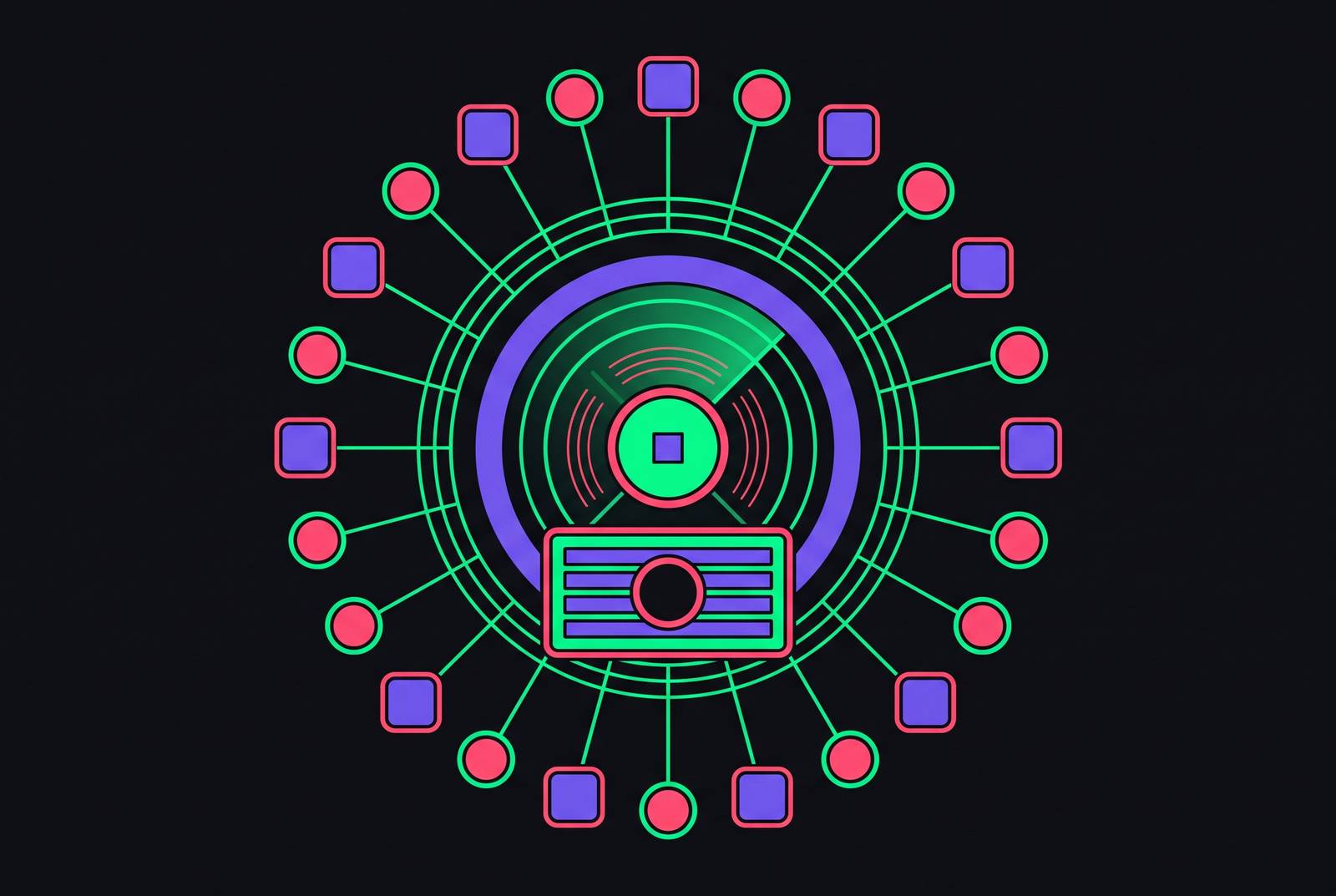
Centralized monitoring tools for AI agent infrastructure must connect every tool call to a verified identity and enforce access policy before the action runs. Securing MCP OAuth credentials also requires centralized credential handling, JIT issuance, scope-limited tokens, and automatic rotation. Together with tool inspection and cross-session monitoring, these controls give security and platform teams the authoritative view that separate team dashboards cannot provide.
Why the way agents work makes traditional monitoring blind to what matters
Operating systems gained a security boundary through a kernel that mediates access to resources. Agent infrastructure needs the same kind of boundary, but current deployments often lack the enforcement layer that makes mediation real. TU Berlin and Max Planck researchers describe the mapping directly, with the agent runtime acting as the kernel, tools corresponding to system calls, and the gateway managing network egress. The key feature is control over what can execute.
AI agents need that control because they retain memory across sessions, invoke privileged tools, make multi-step plans, and coordinate with other agents. The University of Connecticut LASM survey describes attacks on these systems as emergent, compositional, and temporally extended. Authorized actions can combine into harm, an attack can pass through a layer that a particular control cannot see, and a payload can wait weeks before execution. The survey’s non-transferability finding explains why watching model output or API activity alone cannot cover all the layers in the stack. A clean event at one layer does not establish that the larger sequence is safe.
How the MCP protocol turned agent tool-calling into an enterprise attack surface
MCP connected agents to tools faster than enterprises could build monitoring for those connections. The protocol specification has no native defenses against tool poisoning, rug pull attacks, or cross-server tool shadowing. As of May 2026, at least seven confirmed high- or critical-severity CVEs spanned MCP-integrated platforms including MCP Inspector, LiteLLM, Cursor IDE, LibreChat, and Windsurf.
Malicious instructions sit in tool descriptions that agents read but most host UIs do not show to people. The agent then treats that untrusted metadata as system instructions. A proof of concept on Cursor IDE demonstrated full SSH private key exfiltration without user interaction. Monitoring that ignores the description cannot see the instruction that caused the action.
Authentication gaps make that exposure worse. The Cloud Security Alliance notes that MCP authorization defines OAuth 2.1 but leaves authorization optional, and a July 2025 scan found over a thousand instances open to the public that answered unauthenticated requests. Inspection therefore has to cover both what a tool claims to do and how access to it is authorized. At the gateway, platforms including Runlayer check MCP metadata and behavior before agents act, so enforcement takes place at the layer where poisoned descriptions and malicious instructions enter.
Why fragmented, per-team monitoring cannot close these gaps
One team can see its agent, another its service, and another its credentials without anyone seeing the action that crosses all three. This is a limit imposed by the monitoring architecture. The LASM survey places the highest-severity threats in an under-studied zone spanning multi-agent coordination, ecosystem, and governance layers across longer or nested execution periods.
Only 23% of organizations have a formal enterprise-wide agent identity strategy, and most are not confident their IAM can handle agent identities. When each MCP server also maintains its own authentication configuration, credential sprawl makes post-incident attribution nearly impossible across teams. A record of a successful request does not, by itself, establish which agent acted on whose behalf. Runlayer ties actions to an SSO-backed identity layer and tool-call policies, addressing this attribution problem through centralized agent governance.
Those disconnected records obscure cases in which an MCP server unintentionally acts with broader privileges than the user should have because it holds credentials for multiple systems. One team’s monitoring cannot show what the scope should be across that stack. Teams also create shadow usage when they connect agents and MCP servers without using a central registry. Without an inventory baseline, security cannot reliably distinguish an approved connection from a new server or an expanded scope.
What centralized monitoring must actually do — and what it is not
Centralized monitoring has four required functions, namely attributable identity at every action, real-time tool-call inspection, cross-session and cross-agent behavioral correlation, and policy enforcement at tool-call depth. Identity establishes who authorized an action. Inspection examines what the agent is about to trust. Correlation links behavior over time, while enforcement decides whether execution can go ahead.
The LASM survey finds that tool execution attacks reduce to principal trust inversion, where the agent follows instructions from a source it should not trust. That makes tool definitions security-relevant inputs. Monitoring must inspect them at registration and again whenever they change. It must also retain enough context to connect a payload installed earlier with behavior in a later session or another agent. Current-session visibility cannot detect a threat whose parts are separated in time.
Enforcement then has to intercept the call before it executes. One call can exfiltrate data, modify records, or invoke another agent, so a later alert cannot substitute for a policy decision. A centralized system is therefore not simply a single-vendor SIEM retrofitted for agents, a model output filter, or a compliance check added after deployment. The kernel analogy matters because it describes mediation of actions.
The tool landscape that has emerged to provide this visibility
Tools in this market address different parts of that control system. Their fit depends on which requirement they primarily serve and what other coverage an enterprise needs. Model governance, agent inventory, runtime enforcement, audit evidence, and identity management are related but distinct jobs.
IBM watsonx.governance addresses agent lifecycle governance and model risk in regulated environments. Its Agent Monitoring capability, added in 2026, tracks accuracy, hallucinations, and context relevance with reasoning trace capture for auditability. Its primary role is model and output quality monitoring, rather than native MCP-layer tool-call enforcement or cross-agent identity attribution.
Kore.ai launched its Agent Management Platform on March 17, 2026, to govern, monitor, and manage agents across frameworks, clouds, and vendor ecosystems. Its primary fit is inventory and cross-framework management for organizations running heterogeneous agent environments.
Lyzr Opencontroller addresses runtime discovery, including unregistered agents in clusters, AWS, Azure, and GCP agent services, and unsanctioned AI tools on employee devices. Its dual gateways check agent invocations and model calls for identity, permissions, and spend limits before action.
Fiddler AI records agent behavior, actions, and decisions to produce audit evidence aligned with GDPR, HIPAA, NAIC, and SR 11-7. Its primary fit is compliance-oriented audit trails for organizations with specific reporting requirements. OneTrust AI Governance expanded in March 2026 with continuous monitoring and real-time agent detection. Its main role is feeding monitoring findings into GRC workflows in regulated industries.
Microsoft Agent 365, generally available from May 1, 2026, gives each agent an Entra Agent ID for identity, lifecycle, and access management. Third-party agents from AWS Bedrock, n8n, and other frameworks can use workload identity federation to onboard to Microsoft Entra Agent ID. This supplies an enterprise identity layer, but does not by itself provide MCP-layer threat detection or cross-session behavioral correlation.
For coverage across the four requirements, Runlayer combines SSO, SCIM, and JIT credentials with MCP-layer inspection, tamper-proof audit logs, full OTEL tracing, and tool-call policy enforcement. Its primary role spans agent enablement, centralized control, and MCP-native security, including detection for tool poisoning, prompt injection, and intent drift. Its MCP server catalog also has built-in OAuth and credential handling, which make access easier so teams have less reason to turn to shadow usage.
How to secure OAuth credentials and authorization for enterprise MCP tool calls
Monitoring depends on authentication that makes each action attributable. Without it, a log can show that something happened without establishing who authorized it or which permissions applied. Centralized credential management therefore needs JIT issuance, scope-limited tokens, and automatic rotation. These controls constrain access and give monitoring records the identity context needed for investigation. Monitoring cannot repair an authorization boundary that the underlying connection bypasses.
The OpenID Foundation’s Identity Management for Agentic AI framework argues for explicit “on-behalf-of” delegation. An agent should prove both its identity and what it is permitted to do for the person behind the request. The framework proposes extensions to OAuth 2.0 and OpenID Connect for agent-specific credentials. This separates the existence of a valid credential from permission to perform a particular action. Tool-call enforcement needs both.
The July 2026 MCP specification update deprecated Dynamic Client Registration (DCR) in favor of Client ID Metadata Documents (CIMD), retaining DCR only for backward compatibility. Enterprises using DCR-based setups should treat that change as a migration requirement. The Cloud Security Alliance’s Agentic Trust Framework, published on February 2, 2026, has a reference architecture that uses a structured maturity model to apply Zero Trust principles to autonomous agents. Authentication supplies the foundation and must be designed with monitoring and enforcement.
The compliance obligations that make centralized logging a legal requirement, not a best practice
Centralized logging is more than a security preference where organizations must provide attributable records and human oversight. The regulatory and standards direction strengthens the case for funding it as shared infrastructure. However, legal obligations, standards development, and governance frameworks are not interchangeable. The compliance case needs to distinguish what applies now from what provides a design reference.
The EU AI Act’s Article 50 transparency obligations have been in force since August 2, 2026. High-risk obligations for stand-alone Annex III systems are deferred to December 2, 2027. That gives affected enterprises a defined window for building compliant infrastructure. The rules do not apply in the same way to every agent deployment, and a centralized dashboard alone does not show that an enterprise meets them.
NIST launched an autonomous AI agent standards initiative in February 2026 with three parts: work led by industry to develop standards, work led by the community to develop open-source protocols, and research into the foundations of security and identity. The Agentic Trust Framework provides a separate governance reference for applying Zero Trust to agents. Together with the EU AI Act, these efforts support investment in attributable per-action records, human oversight, and containment.
How to evaluate whether a monitoring approach actually closes the gap
The first criterion is attribution across the relevant retention window. For any agent action, the system should establish which human authorized it, under what scope, using which credential, and against which tool version. Forensic attribution requires a record that can answer those questions, a test that connects the identity foundation directly to the usefulness of the logs.
The second criterion is continuing inspection of tool definitions. The system must detect changes after approval rather than assuming that a tool remains safe because registration succeeded. Tool poisoning and rug pull attacks take advantage of that gap between the trust first granted to a tool and what it does later. Server upgrades and tools-list changes should thus be handled as configuration changes that affect security, with more care than routine updates.
The third criterion is correlation across sessions and agents. An evaluation must establish whether the system connects behavior over time or only examines isolated calls.
The fourth criterion is whether policy can block a tool call before it executes. All four criteria are necessary because missing one leaves part of the threat surface uncovered. For security and platform teams, these evaluation criteria are also the procurement checklist. They distinguish monitoring in name from monitoring that can attribute, inspect, connect, and stop agent actions.