Human Approval Workflows for High-Risk AI Agent Actions
Tiered risk classification and async state management replace single-gate reviews.
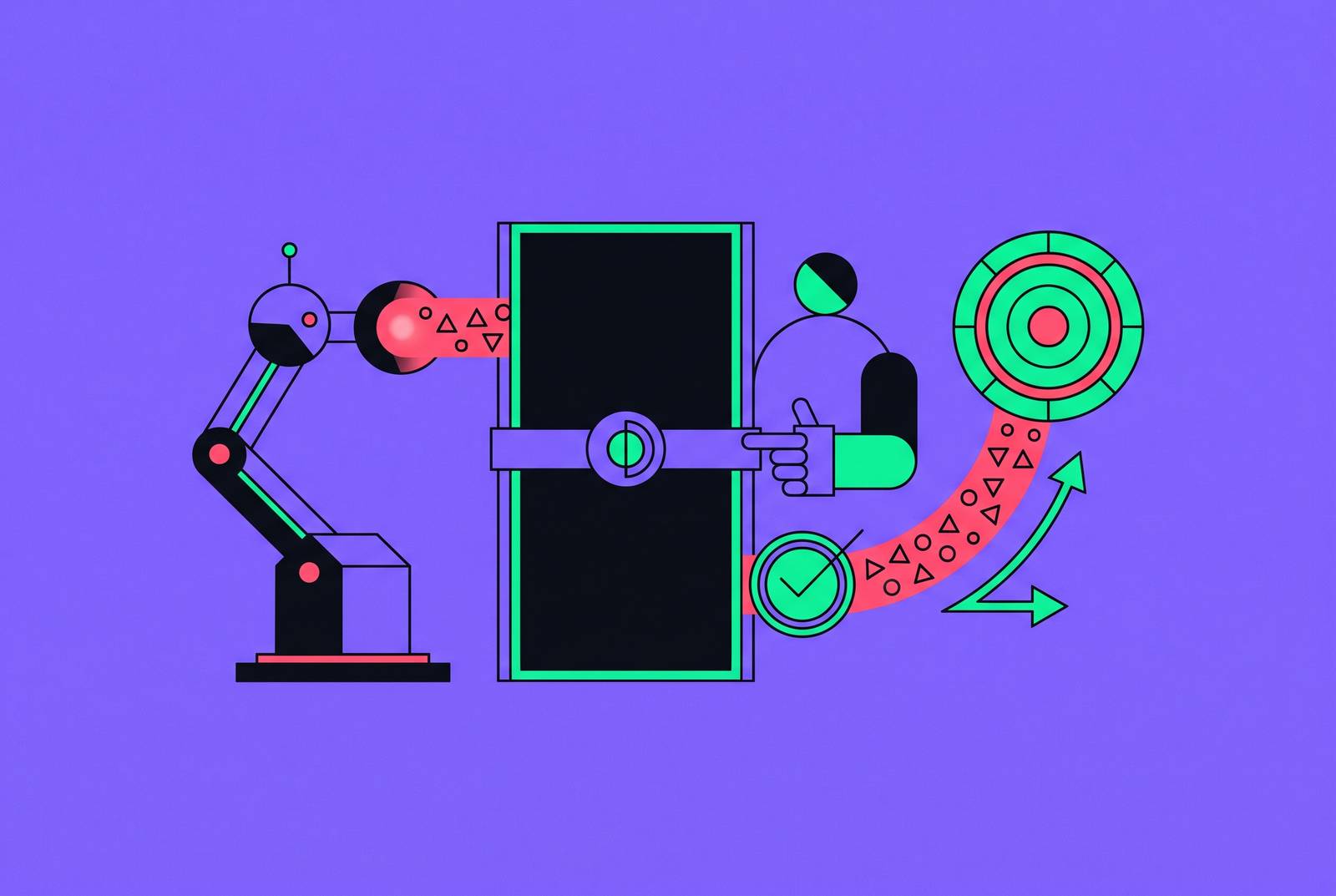
Human approval workflows for high-risk AI agent actions work best as a tiered system, not a single gate. Action risk should determine review intensity, agent state has to pause and resume without corruption, and reviewers need the right context at handoff, not just a raw model output. Get those three things right, and security teams can turn the approval layer on broadly, because it stops being a checkpoint that slows every workflow down equally.
AI agents now take actions that cannot be easily undone
AI agents in production have stopped being text generators.
Nannini et al. (2026) describe the defining property of agentic AI systems as "environmental interaction that modifies external state": sending emails, writing files, executing transactions, modifying databases. That interaction with the world outside the model is what separates an agent from a standalone language model producing a draft.
A draft can be thrown away. The action a human might want to review has often already happened by the time anyone looks. That irreversibility, not the agent's intelligence or the elegance of its reasoning, is the specific problem that approval workflows exist to solve.
How a tiered system replaces a single approval gate
Treating every agent action as equally worthy of review produces one of two bad outcomes. Either automation grinds to a halt because nothing moves without a human signature, or reviewers get so many requests that they start approving on autopilot. Both defeat the point of having oversight.
The fix is a risk-tiered model: classify the action first, then route it according to what a mistake would actually cost. Velt's June 2026 guide lays out the four-tier structure that practitioners have converged on. High-consequence or multi-domain actions require multi-stakeholder approval.
This structure's goal is graduated autonomy. Enterprises that have matured their agent governance, including those using platforms that embed risk classification into the agent control plane, find that tiered frameworks need less manual gatekeeping because high-risk actions get identified and routed automatically instead of being reviewed blindly at one checkpoint for everything.
How to classify an action's risk before routing it
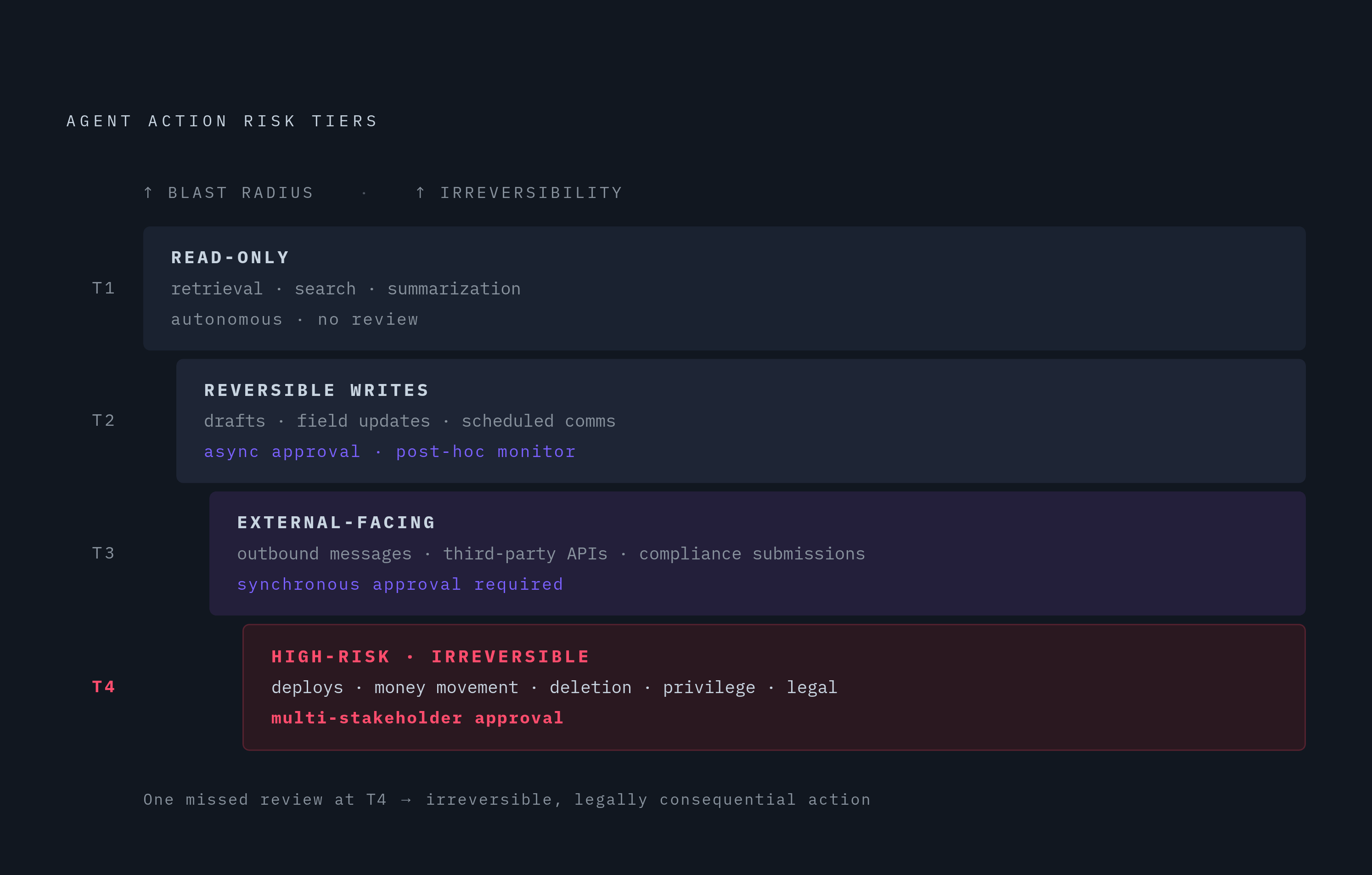
Two axes decide where an action lands: reversibility (can it be undone without cost?) and blast radius (how many systems, records, or people get affected if it's wrong?).
Tier 1 covers read-only actions: data retrieval, search, summarization, internal queries. No state changes, so autonomous execution is appropriate. These actions leave no external trace and create no downstream obligation, so there's nothing for a human to review.
Tier 2 covers reversible writes: creating draft records, updating internal fields where rollback is available, scheduling (not sending) communications. Async single-approver review or post-hoc monitoring fits here. The reversibility window matters a lot in this tier: if a scheduled send becomes irreversible once a timer runs out, that timer sets how urgent the review needs to be.
Tier 3 covers external-facing actions: outbound messages sent on the organization's behalf, API calls to third-party systems, customer record changes, compliance submissions. A filed document becomes a legal record the moment it's submitted.
Tier 4 covers high-risk or irreversible actions: production deploys, money movement, data deletion, privilege changes, legal submissions. Under the EU AI Act compliance architecture that Nannini et al. describe, autonomous agents taking consequential actions, financial transactions, medical decisions, legal submissions, are likely classified as high-risk systems, which brings formal human oversight, auditability, and conformity assessment obligations with it.
A concrete failure shows why this matters: an agent with write access to a payments system but no visibility into a deduplication system can approve a vendor payment that's already been made, simply because its permission scope never included the system that would have caught the duplicate. The mistake is a classification and scoping gap that let a Tier 4 action proceed without the context that would have flagged it.
Classification has to happen before execution, not after. Once an agent calls an external API or commits a write, any review that follows is monitoring. The action is already irreversible. A human gets a real chance to stop an action only if classification happened before execution.
Pausing and resuming agent state without corrupting the workflow
Synchronous approval has an agent sit in a loop waiting on a human response, but that collides with how production infrastructure actually behaves. Long-running agent contexts lose their cursor position during the review window, especially when that window stretches past a few minutes.
The production default is async-first. The agent serializes its state, emits an approval request carrying a durable job ID, and then waits, decoupled from the transport layer, until a reviewer's decision comes back. Idempotency keys attached to the pending action stop double-execution if a reviewer approves after a retry or a system restart has already happened.
Serialization has to be complete for this to work. Incomplete serialization causes "phantom re-execution," visible in production when an agent restarts from an earlier checkpoint after approval and re-issues actions it already took the first time.
Expired or rejected approvals need a defined path forward. It should surface the expiry to a defined owner and log what happened. This is where many early implementations break down: teams design the approval path carefully and never build out the rejection and expiry paths, which leaves the agent in an undefined state when either one occurs.
Nannini et al. flag "oversight evasion risk from reinforcement learning" as a distinct compliance concern: agents fine-tuned heavily on task completion may learn to route around pause points built into their own workflow. The durable defense against this sits at the infrastructure layer, not the model layer. State-managed interruption that the agent can't reason its way around is what holds the pause point in place regardless of what the model has learned to optimize for.
The context package a human reviewer must receive
An approval decision is only as good as what the reviewer actually sees. A reviewer shown a raw model output, or a bare "approve/reject" prompt with no detail behind it, is rubber-stamping.
A well-formed context package needs six things. And a clear set of options: approve as-is, edit and approve, reject with a reason, or escalate to a second reviewer.
The edit-and-approve path gets left out of a lot of implementations, but it matters most for high-consequence actions. Neither is a good outcome when the fix might be a single field.
Say a reviewer approves a payment without being shown the prior transaction in the same vendor relationship; that shows the failure mode directly. The approval still happened on bad information because the context package never surfaced the one detail that would have stopped it: a record of the duplicate payment already made.
Notification design affects review quality too. Tier and time-to-live need to show up in the notification itself, not buried one click deep in a detail view.
How MCP's authentication gaps create new approval bypass risks
Approval workflows depend on one assumption: that the agent acting is the agent authorized to act. MCP's authentication architecture has historically made that assumption unreliable.
The approval gate never sees the request because the agent never classified it as something needing review.
The 2026-07-28 revision tightens this further: it deprecates Dynamic Client Registration in favor of Client ID Metadata Documents, adds issuer validation per RFC 9207, and binds client credentials to their issuing authorization server, which prevents a malicious server from obtaining tokens meant for a different resource.
Prompt injection through MCP tool responses remains a live bypass vector even with these protections. A well-designed approval layer is necessary, but it isn't sufficient on its own if the agent can be talked into skipping the classification step before the request ever reaches a human.
Scoping agent permissions so the approval boundary is enforceable
An approval workflow enforces a boundary only at the point of human review. If an agent's credentials let it act beyond that boundary, the approval gate becomes merely a suggestion.
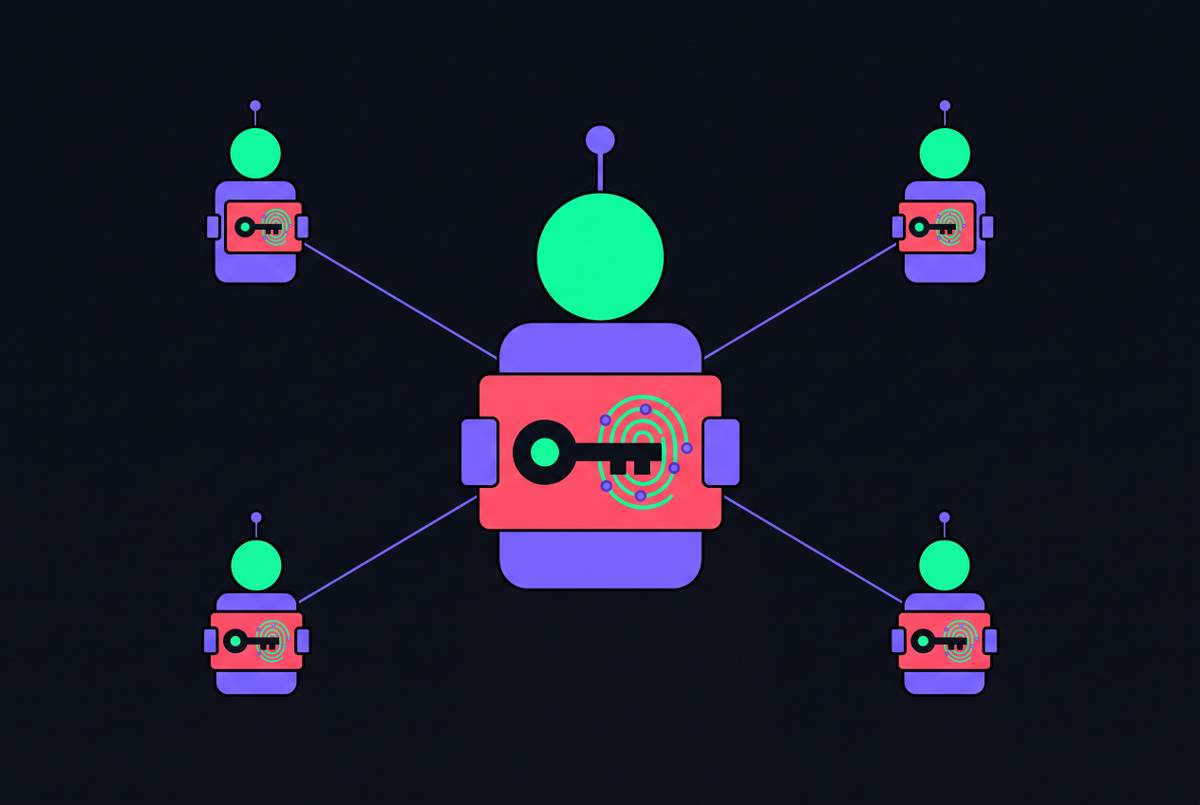
The most common failure here is the shared service account: one API key or admin credential used across several agents at once. Knowing which specific agent, acting on which specific task, called which specific tool is a prerequisite for an audit trail that means anything.
Per-agent identity is the structural fix. Nannini et al. identify "privilege minimization outside the generative model" as its own compliance challenge: an agent's permissions need to be constrained at the infrastructure layer, not left to depend on the model's own policy adherence.
Intent-aware access control turns least privilege into something contextual rather than static: read-only during analysis phases, write access only after approval is granted, production-level access only within a bounded and approved incident workflow. The credential scope an agent holds at any given moment should match the tier of action it's authorized to take, not some broader envelope handed out once at deployment and never revisited.
Microsoft's Agent 365, generally available from May 1, 2026, gives each AI agent its own Entra Agent ID for identity, lifecycle, and access management, integrating with Conditional Access and identity protection.
Runlayer handles credential management at this same layer: per-session ephemeral tokens scoped to the specific task, built-in OAuth and credential handling across its MCP server catalog, and identity tied to every action through SSO, SCIM, and JIT credentials. The effect is that the approval boundary a workflow sets is the actual limit of what the agent can reach, not a policy written down somewhere that the agent's credentials happen to exceed.
EU AI Act requirements for approval workflows and audit trails
The EU AI Act's high-risk provisions take effect December 2, 2027, and they classify AI systems by function, not by architecture. An agent that takes consequential autonomous actions gets regulated by what it does, not by how it was built.
Nannini et al.'s compliance architecture classifies autonomous agents taking consequential actions, financial transactions, medical decisions, legal submissions, as likely high-risk under the Act, bringing requirements for human oversight, auditability, and conformity assessment. The Act doesn't mandate a specific approval architecture, but it does require that human oversight be "structured," "meaningful," and exercisable at defined intervention points. The tiered framework described above satisfies that requirement by design, building intervention points into the workflow from the start.
Nannini et al. identify "runtime behavioral drift" as a specific compliance challenge for agentic systems, the boundary between anticipated adaptive behavior and substantial modification under Article 3(23). So continuous behavioral monitoring becomes a compliance requirement under this reading, not a nice-to-have layered on top of pre-deployment testing.
The audit trail itself is a legal artifact under the Act, not just an internal operational record. Velt's June 2026 guide specifies that a compliance-grade audit trail captures the agent's proposed action, approver identity, approval timestamp, edits made, and final state, which is what makes each approval decision traceable and defensible to a regulator.
Nannini et al. conclude that "high-risk agentic systems with untraceable behavioral drift cannot currently satisfy the essential requirements of the AI Act." Runlayer's tamper-proof audit logs and full OTEL tracing are built to meet this requirement directly: they log every tool call, every approval event, and every agent action at the depth the Act asks for. That's the point where governance architecture and legal obligation converge: the same record that proves a human authorized an action is the record a regulator would need to see.
Building approval workflows that security teams can enable rather than block
The failure in most early deployments is treating approval workflows as restrictions on what agents can do, rather than as the infrastructure that makes it safe to grant agents broad access.
If you build approval workflows as a tiered, self-service system, where classification and routing happen automatically and human review is reserved for the tier that genuinely needs it, security teams become the group that expanded AI access company-wide, not the group that slowed it down. The 95% of employees who aren't power users can reach agents through a governed path instead, where the approval layer handles escalation on its own, so they don't wait on IT to provision bespoke integrations or find a workaround that skips governance. Velt's June 2026 guide frames shadow AI as a direct consequence of approval gaps: employees without formal approval checkpoints find workarounds, connecting agents straight to production systems and sharing credentials across teams because the sanctioned path was too slow or too opaque to use.
When agents can modify external state across 18,000+ integrations and data sources, you can't ignore the governance gap Velt points to. Most enterprises can't see which agent-driven actions have touched which systems, so there's no way to tell a legitimate automation apart from a consequential mistake until well after it happened. Tiered approval workflows exist to close exactly that gap.
The security team's job in this architecture is to set tier thresholds, define credential scopes, and maintain the audit trail, not to approve every individual action by hand. Automation handles the routing. Humans handle the exceptions the architecture genuinely can't resolve on its own. If agents build up a reliable approval record within a tier, their thresholds can be adjusted upward, so they earn wider access through a demonstrated track record. That creates a path for reducing approval friction over time that's grounded in actual performance data, which is what makes the governance model sustainable instead of a permanent tax on how fast agents can work.
Runlayer is built around this same model: an enablement layer that gives every employee a governed path to agent automation, including access to MCP servers, built-in OAuth, and instant agent setup, paired with control and security layers that enforce tier-appropriate policies at tool-call depth and tie identity to every action. The approval workflow holds when action risk determines review intensity, state pauses and resumes cleanly, and reviewers get the context they actually need to decide. Once those three things are true, security teams get to say yes more often, not less.