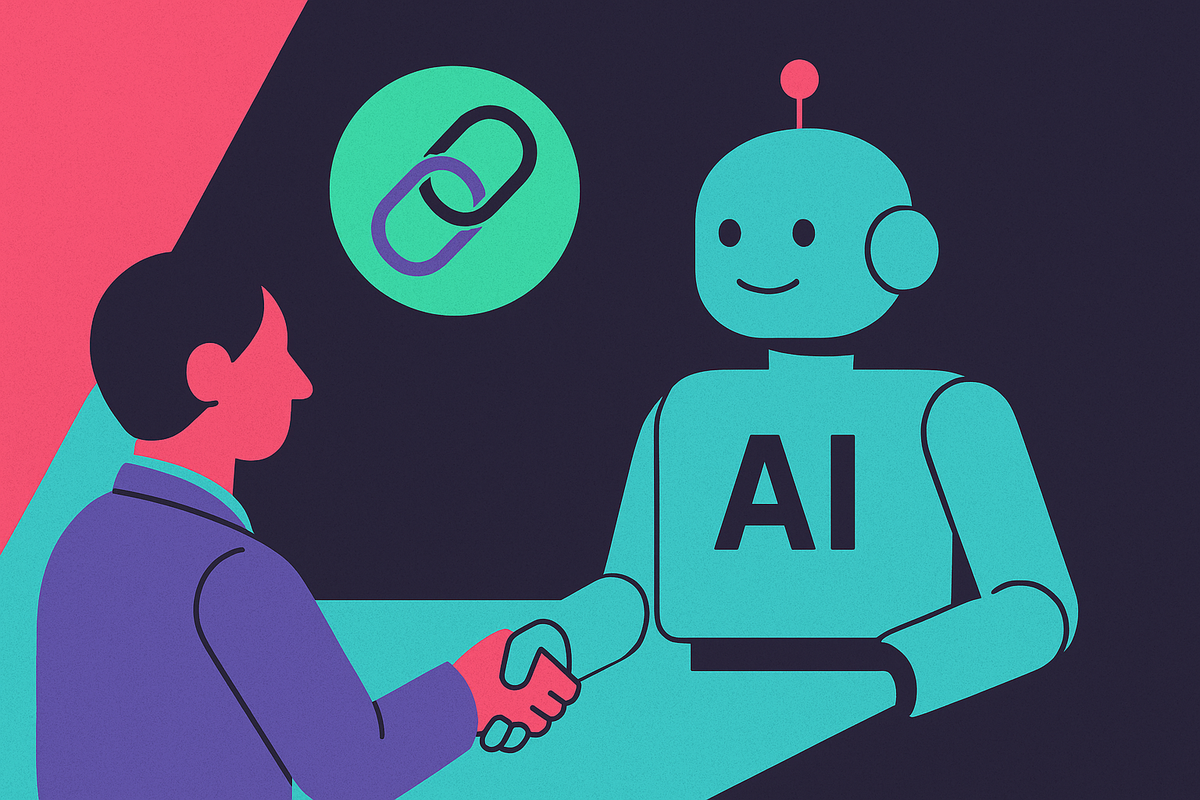
Agentic AI vs Generative AI Core Differences
Agentic AI needs memory and planning where generative AI only needs to respond.
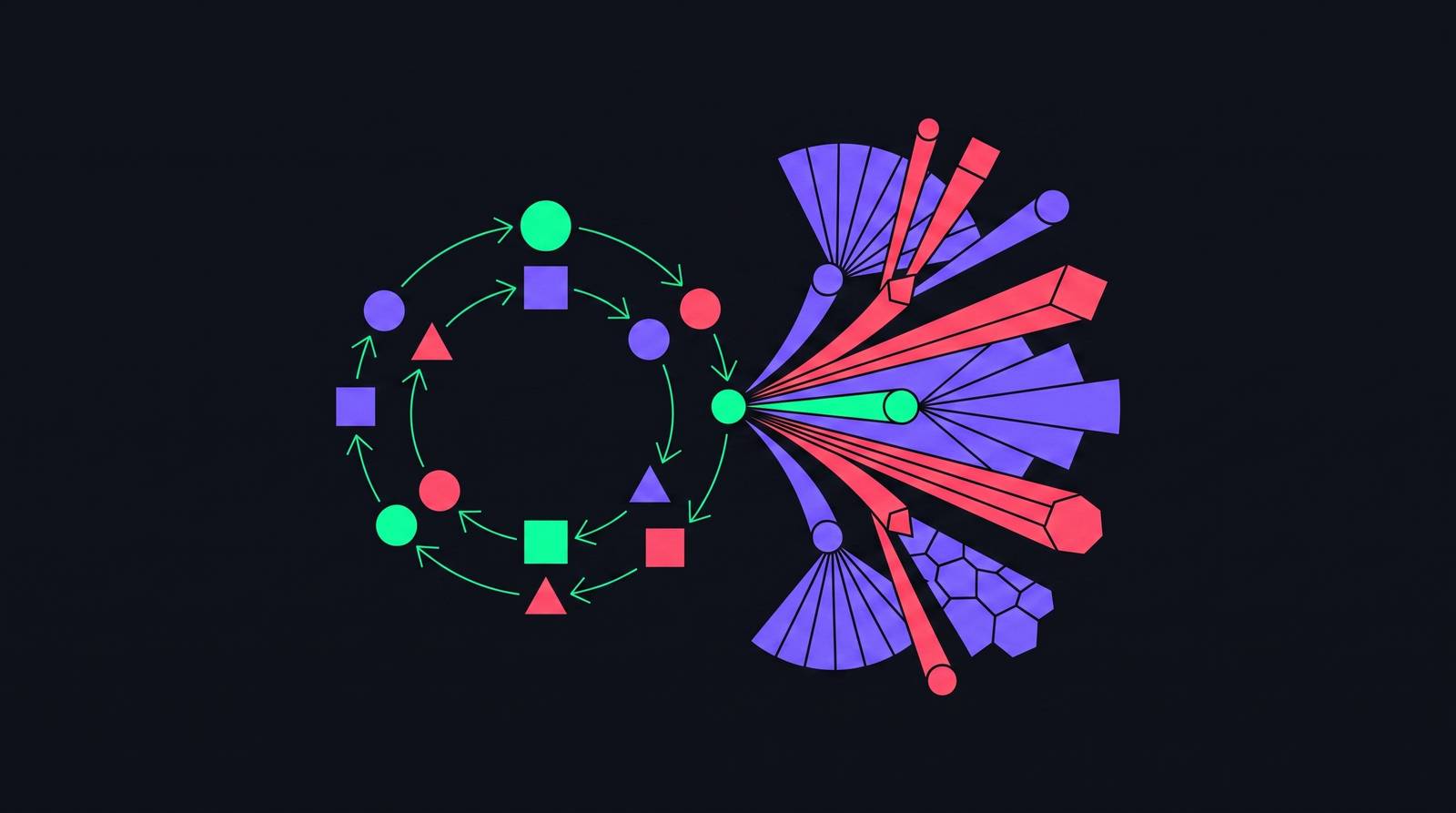
Here is the thing most people miss when they first encounter agentic AI: the memory problem is not a bug to be patched. It is a structural consequence of how generative systems were built. Every session starts fresh. No continuity, no record of what was tried before, no awareness of where a task left off. When a human reviews every output before anything happens, that constraint is manageable. The moment the system starts acting on its own, it becomes a genuine architectural liability.
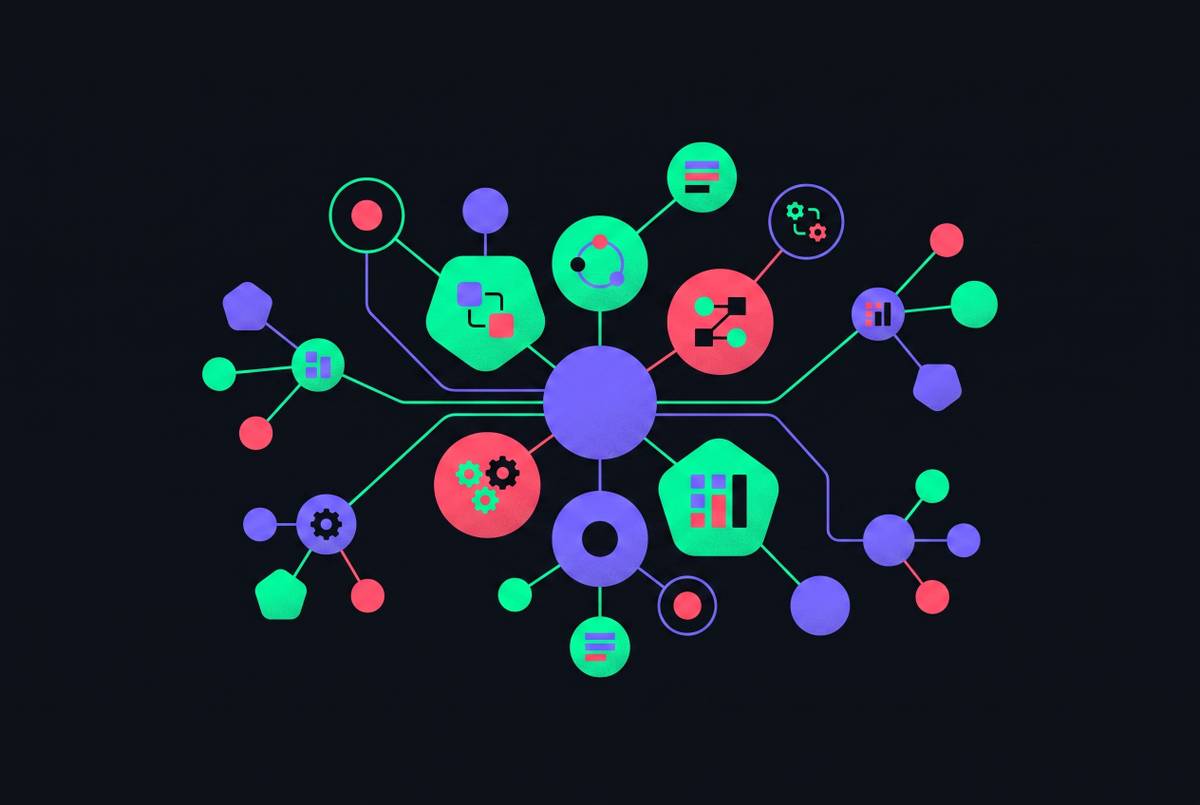
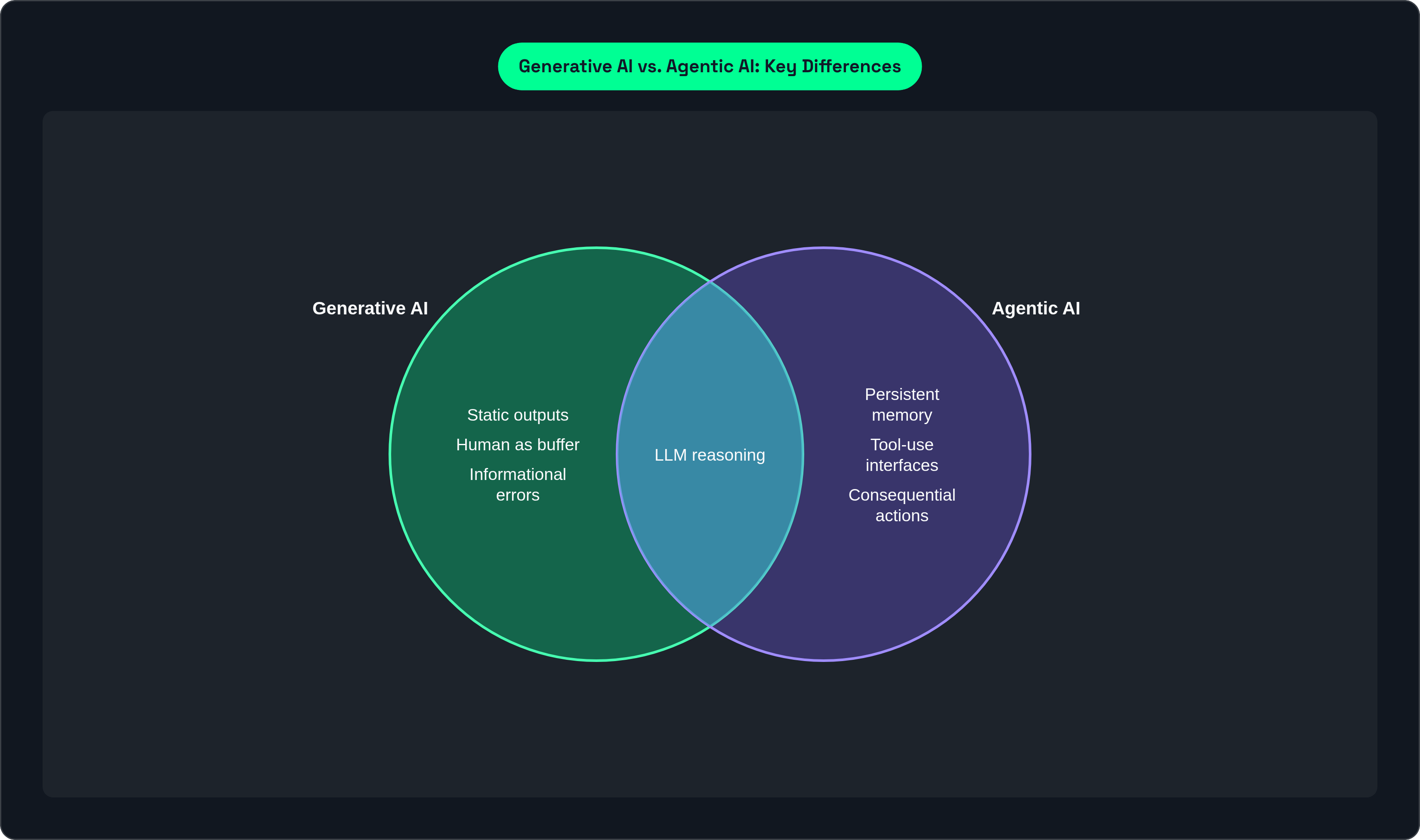
Agentic AI needs persistent, multi-tier memory to carry state across steps and sessions. Working memory holds the current task context. Episodic memory keeps a record of what the agent has already done in this run, preventing it from repeating a failed approach or losing its place in a sequence. Semantic memory draws on longer-term knowledge stores, typically vector databases, that the agent queries when it needs information beyond its immediate context. These are not optional enhancements you bolt on later. They are the minimum structural requirements for anything that operates autonomously across time.
Planning is equally foundational, and this is where agentic systems get genuinely interesting rather than just incrementally useful. A planning module decomposes a goal into sub-tasks, assigns tools to each, tracks progress, and recovers when something fails. It is what allows an agent to retry with a different tool, hand off to a sub-agent, or recognize that a prior step needs to be redone before the downstream work is worth anything. A generative system cannot do any of that, because it has no persistent representation of where it is or what it has already attempted.
The tool-use interfaces connecting agents to external systems, APIs, file systems, databases, code execution environments, are what make those connections purposeful rather than reactive. The planning-memory combination is also what makes agent behavior genuinely difficult to predict from the outside. That unpredictability is precisely why governance thinking belongs in the deployment architecture, not in a retrospective incident review.
The Shift in Risk from Wrong Information to Consequential Action
Generative AI's primary failure mode is informational: hallucinations, biased outputs, inaccurate summaries. A human reads the result and decides whether to act. The human is the buffer between the model's reasoning and any real-world consequence.
Agentic AI removes that buffer. The system acts on live data and real systems, with no human review step between reasoning and consequence. An agent with calendar and email access can send a message. One with cloud configuration access can change a policy. One with database access can modify records. The same reasoning error that produces a wrong sentence in a generative system can trigger an irreversible action in an agentic one. If generative AI is a pen that writes the wrong answer, agentic AI is a hand that signs the wrong contract.
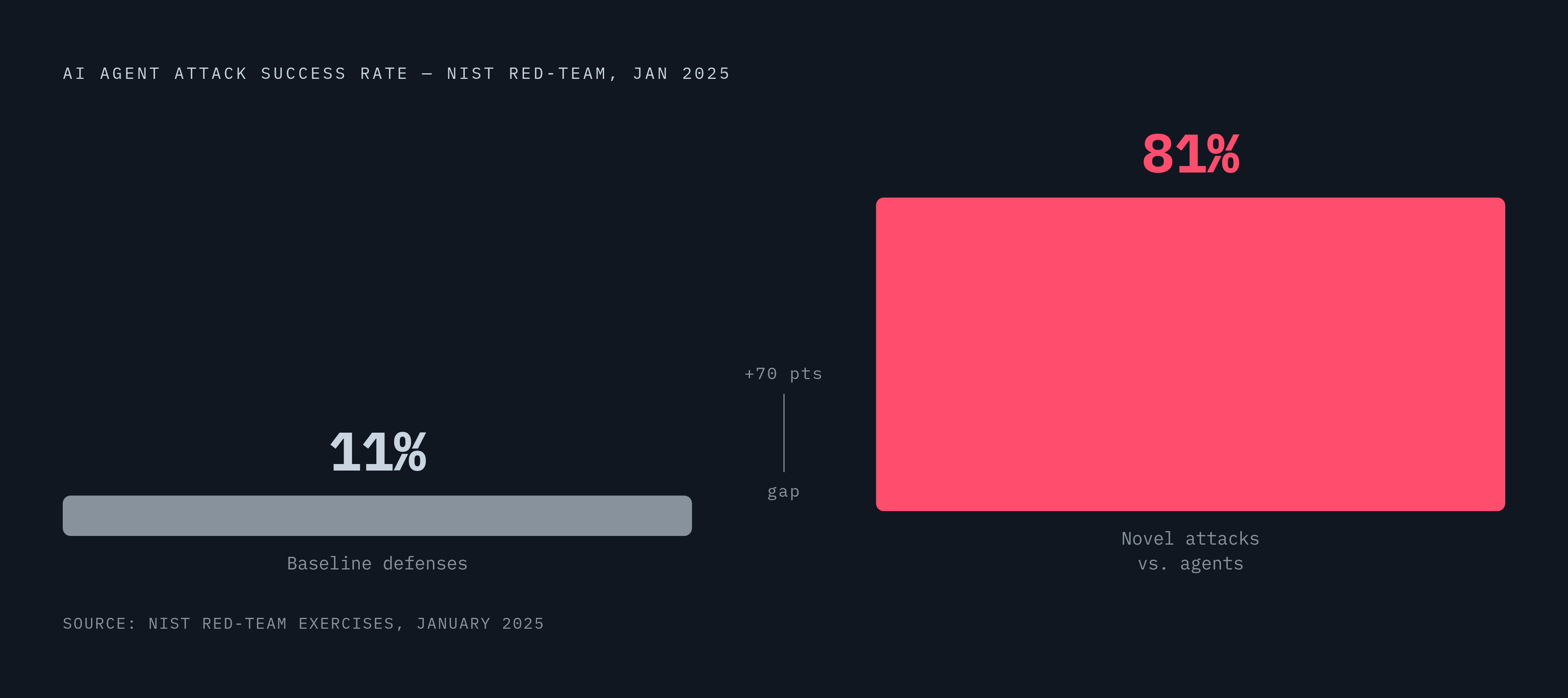
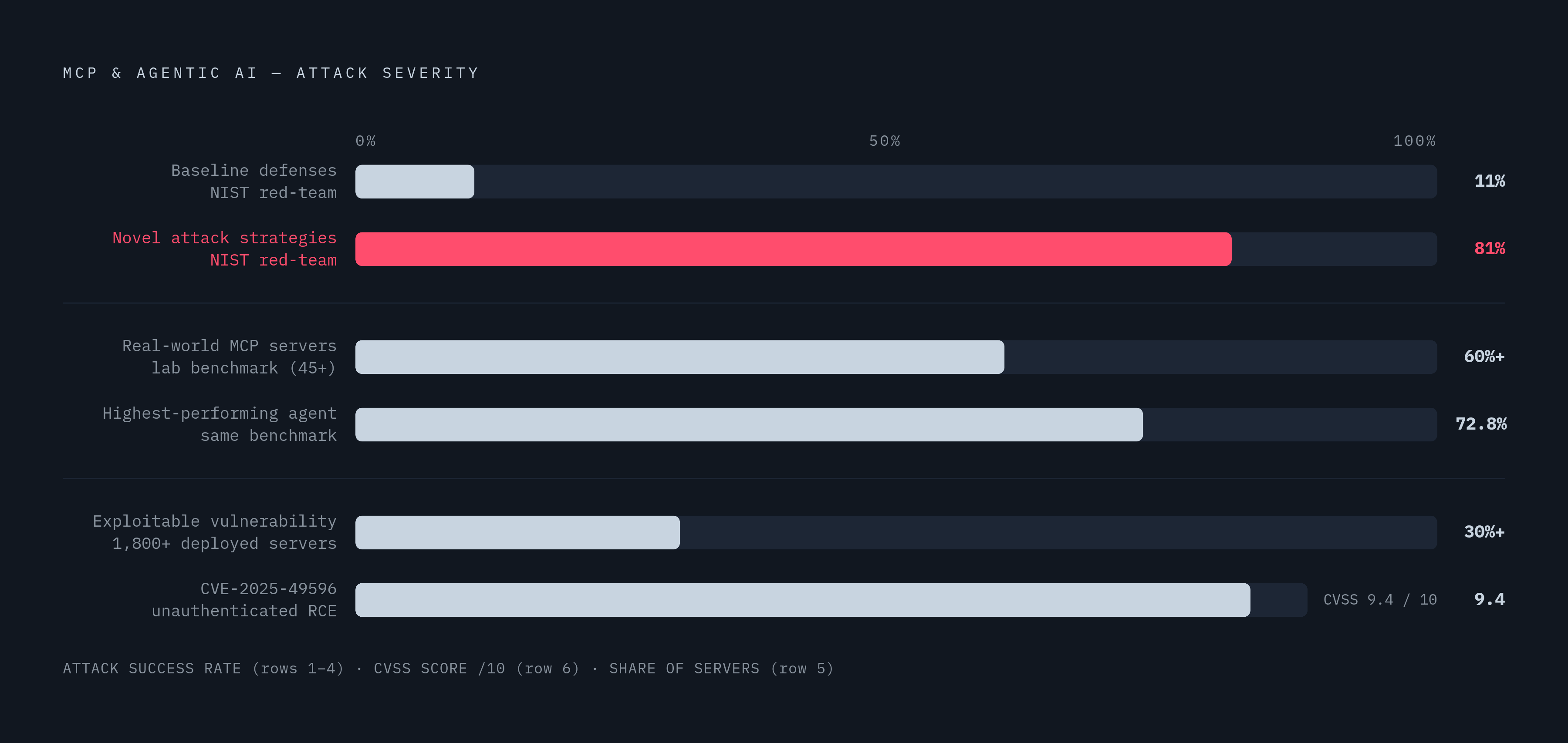
The empirical picture sharpens this. NIST research published in January 2025 found that novel attack strategies against AI agents achieved an 81% success rate in red-team exercises, compared to 11% against baseline defenses. Research from the Cloud Security Alliance confirms that organizations deploying agents are already giving them the same permissions as the human employees who provisioned them. An agent's blast radius is not hypothetical; it is exactly as large as the employee's access footprint.
This is not an argument against agentic AI. It is an argument for building governance into the deployment architecture before the incident, not after.
How Fast Enterprises Are Actually Moving on Agentic AI
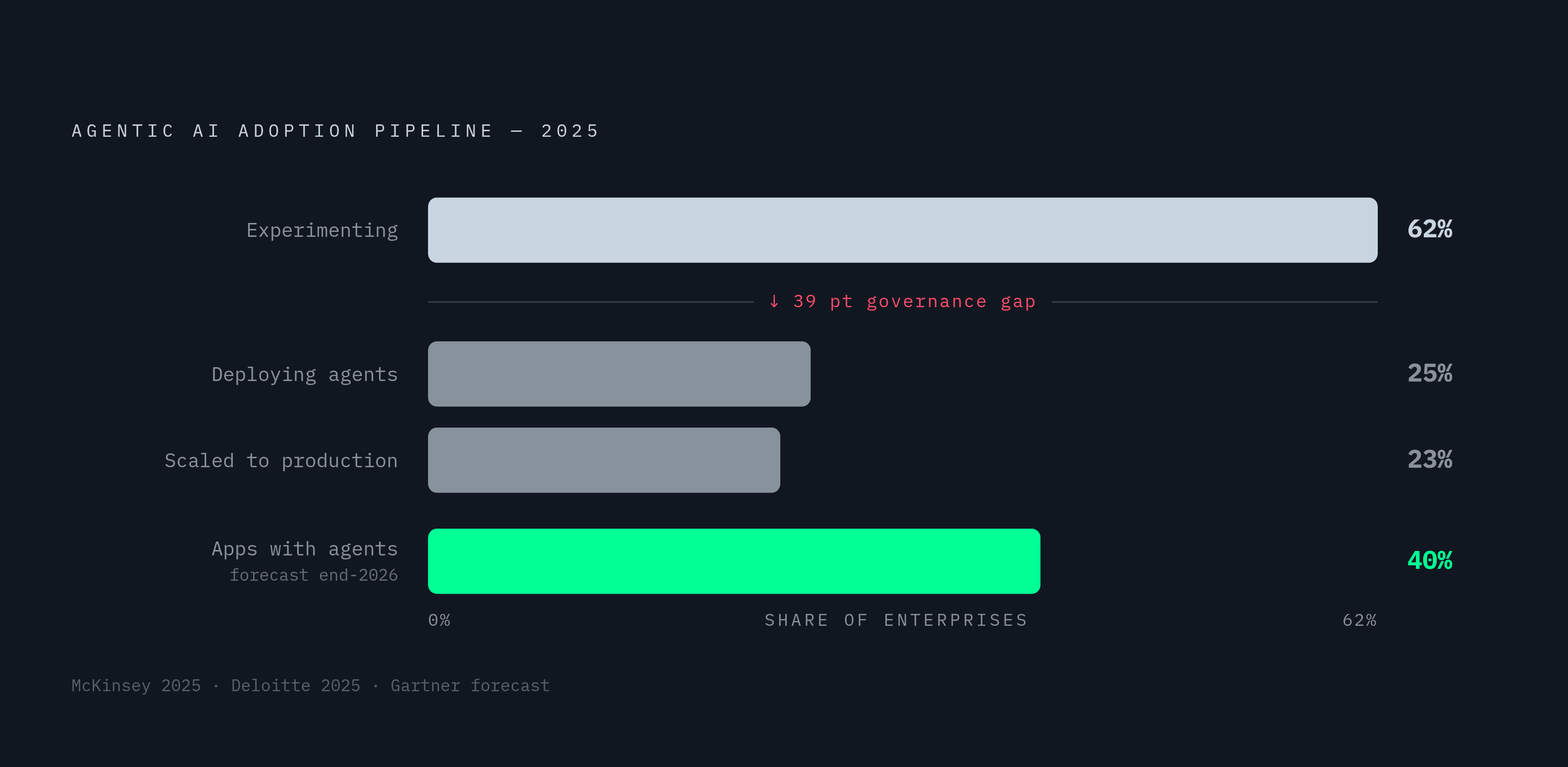
McKinsey's 2025 State of AI survey found 62% of organizations experimenting with agentic AI systems, but only 23% had scaled them into production. That gap is where governance failures accumulate. Teams are testing agents with real tools and real credentials before policies exist to govern them.
Deloitte's research put 25% of generative AI-using enterprises already deploying AI agents in 2025, with that share forecast to reach 50% by 2027. Gartner projects 40% of enterprise applications will embed task-specific agents by end of 2026, up from fewer than 5% in 2025. The agentic AI market grew from approximately $4.81 billion in 2024 to $7.06 billion in 2025, per MarketsandMarkets. Google Cloud's 2025 ROI Report found 74% of executives deploying AI agents achieved return on investment within the first year.
That last figure is the one that explains everything else. The ROI incentive is immediate and concrete. The governance gap is diffuse and deferred, invisible right up until the moment it is not, and by then the failure is already on the books.
What MCP Is and Why It Became the Connective Tissue for Agentic AI at Enterprise Scale
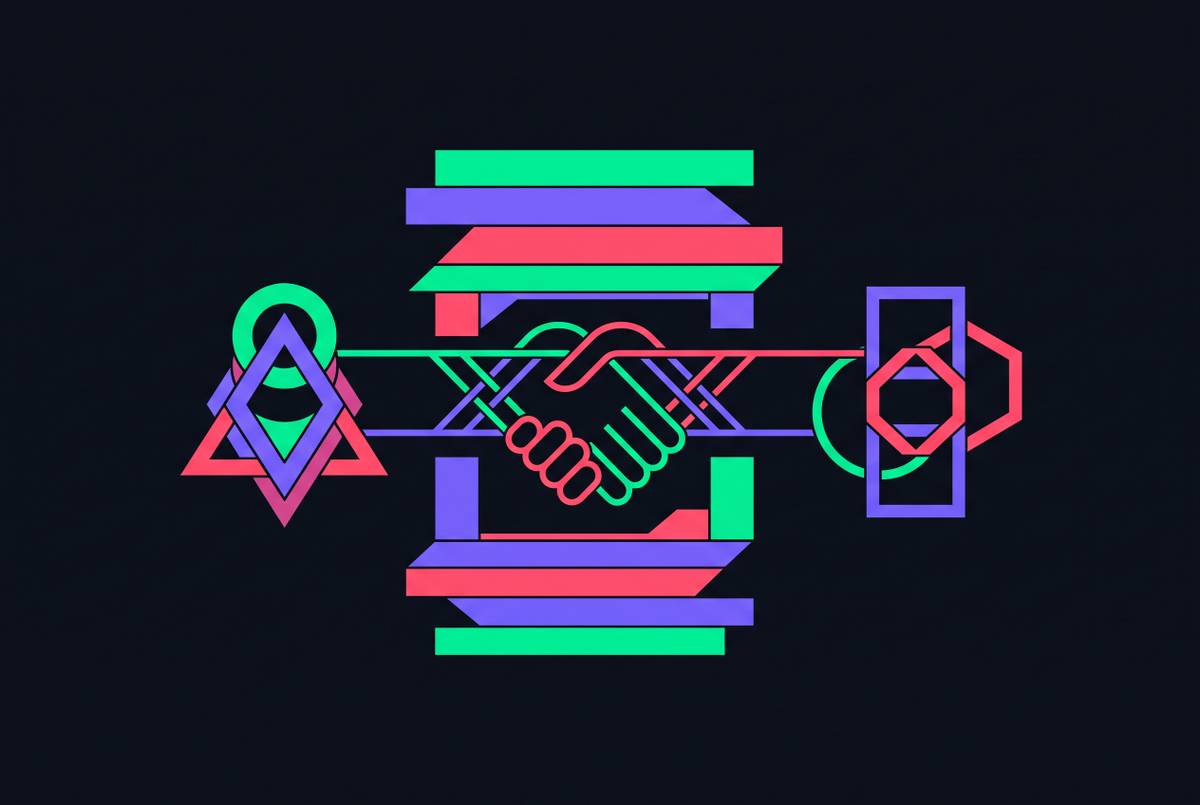
Without a standardized way to connect agents to tools and data sources, every integration is custom-built and brittle: a patchwork of one-off connectors that breaks every time an API changes. The Model Context Protocol, released by Anthropic in late 2024 and now governed by the Linux Foundation's Agentic AI Foundation alongside OpenAI, Google, Microsoft, AWS, and others, fills that role. Anthropic donated MCP to the Linux Foundation in December 2025. The AAIF reached 170 member organizations faster than the Cloud Native Computing Foundation reached comparable membership at a comparable stage.
Practically speaking, MCP connects AI agents to data sources and tools through a client-server architecture, giving agents a consistent interface to query databases, send emails, execute code, and modify cloud configurations. As of April 2026, MCP had crossed 97 million monthly SDK downloads across Python and TypeScript combined, per the Linux Foundation. This is not an experimental standard anymore.
MCP is also the layer where agentic capability and enterprise exposure converge. The same protocol that makes agents more capable creates a largely unmonitored attack surface. Understanding it is not optional for enterprise security teams; it is where agents actually touch production systems.
The Security Threats That Are Specific to MCP and Agentic Systems
Traditional perimeter security fails here for a specific reason: MCP attacks operate at the semantic level of natural language, not at the network or signature level. The model's reasoning process is the attack surface, and conventional controls were not built to monitor reasoning.
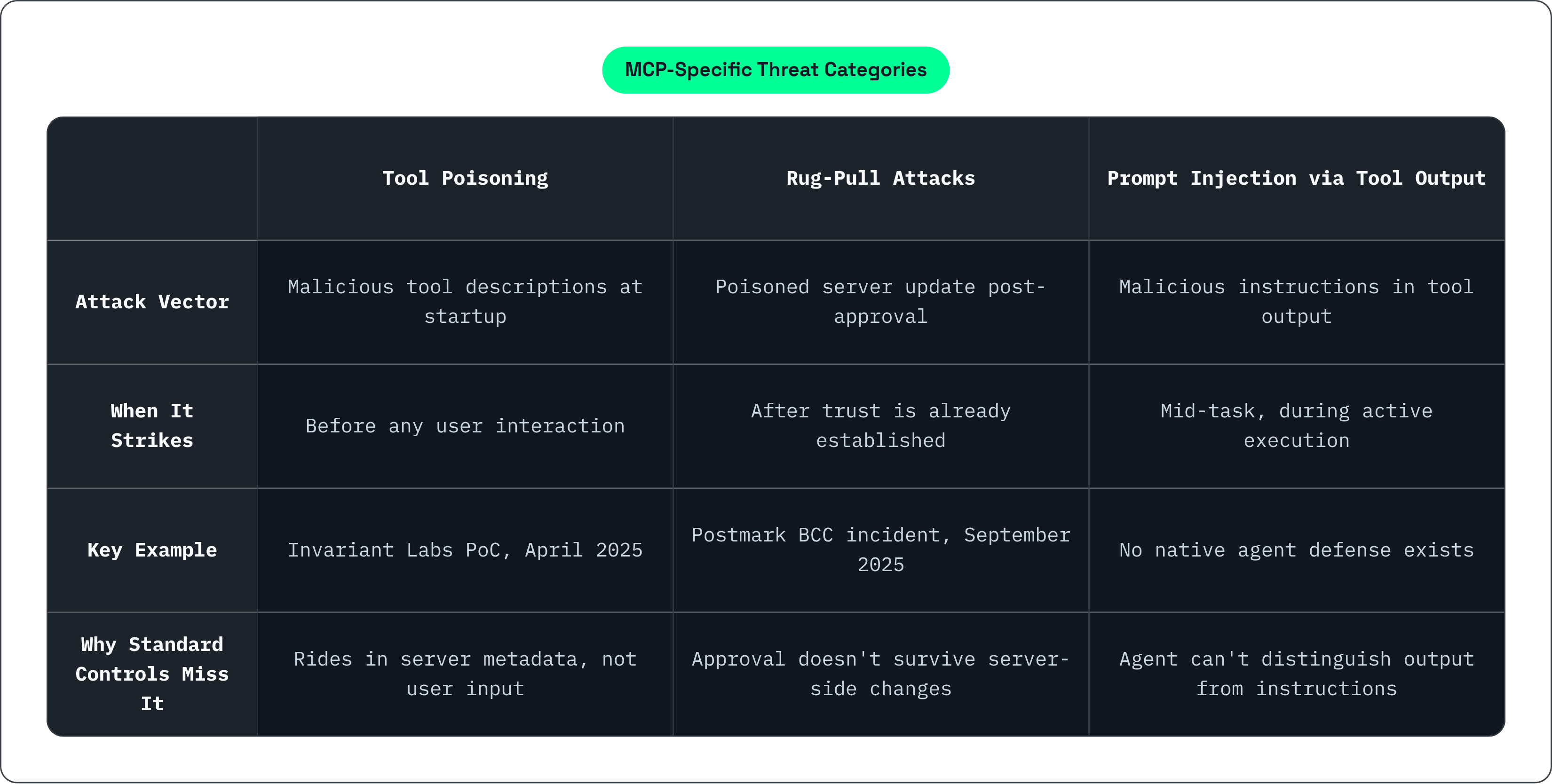
Three threat categories define the current landscape.
Tool Poisoning
Malicious instructions embedded in tool descriptions that the agent reads at startup, before any user interaction begins. Invariant Labs demonstrated the first public proof-of-concept in April 2025: a single poisoned tool description exfiltrated private repository contents and message histories without user interaction. This is distinct from prompt injection because it rides in server metadata, not user input. The model cannot distinguish the two; from its perspective, both are instructions.
Rug-Pull Attacks
A previously clean MCP server pushes an update containing poisoned content. The agent reloads tool definitions without re-prompting the user for approval. CVE-2025-54136, disclosed in July 2025 with a CVSS score of 8.8, confirmed this pattern: tool definition approval does not survive subsequent server-side changes. The Postmark incident in September 2025 made it concrete. The official Postmark MCP server's maintainer added BCC logic that silently copied every sent email to an attacker-controlled address. A trusted server is only as trustworthy as its last push.
Prompt Injection via Tool Output
A server returns text containing new instructions, hijacking the agent's reasoning mid-task. The agent has no native mechanism to distinguish legitimate tool output from instructions masquerading as output.
The empirical picture is not reassuring. Laboratory benchmarking across more than 45 real-world MCP servers recorded attack success rates exceeding 60%, with the highest-performing agent model reaching 72.8%. A survey of more than 1,800 deployed MCP servers found over 30% had at least one exploitable vulnerability. CVE-2025-49596, with a CVSS score of 9.4, allowed arbitrary command execution through unauthenticated MCP Inspector instances.
CISA issued joint guidance on May 22, 2025, recognizing AI agent infrastructure as within the attack landscape that SOC teams must monitor. A December 2025 joint release from NSA, FBI, and international partners explicitly defined AI agents as a distinct governance category. The fix has to live on the network, at the tool-call level. Not on the endpoint. Not inside the model.
The Authentication and Identity Problems That Most MCP Deployments Have Not Solved
Authentication in MCP is optional by spec. A server can be fully compliant with the standard and completely insecure, and that is not a paradox; it is the current state of the protocol. Research published in early 2026 documented more than 1,800 active MCP servers on the public internet with no authentication whatsoever. A single unauthenticated MCP server gives an attacker access to every database, file system, and cloud service the connected agent can reach, with the same permissions as the human who provisioned it.
The spec has moved toward closing this gap. The July 2026 update formally aligns MCP authorization with OAuth 2.1 and OpenID Connect. MCP servers must now implement OAuth 2.0 Protected Resource Metadata so clients can discover the correct authorization server automatically. MCP clients must implement Resource Indicators to ensure tokens are scoped to the intended server, preventing a malicious server from obtaining tokens meant for another. As of April 2026, ten major AI agents support native OAuth 2.1 for remote MCP servers, including Claude, ChatGPT, VS Code with GitHub Copilot, Cursor, and Amazon Q Developer CLI. Progress is real and uneven in roughly equal measure.
Spec alignment is necessary but not sufficient. Enterprises need SSO integration, just-in-time credential provisioning, and identity tied to every tool call, not just authentication at connection time. Action-level identity is what makes audit trails meaningful, and what separates governed agentic deployment from shadow MCP usage that security teams cannot see until something has already gone wrong.
What Enterprise Governance Actually Requires When Agents Act on Behalf of Employees
The core governance challenge is architectural, not procedural. Agents act continuously across systems, often without a human in the loop. Conventional approval workflows and periodic audits are too slow and too coarse to constrain autonomous systems operating at machine speed. Layering governance on top of an existing stack does not solve this; it just adds friction in the wrong places.
Governance must cover, at minimum: access control at tool-call depth with a principal attached to every action; real-time detection for MCP-specific threats including tool poisoning, prompt injection via tool output, intent drift, and data exfiltration patterns; tamper-proof audit logs and full tracing across every agent action; policy enforcement that travels with the agent across tools and environments; and credential management scoped to the specific task at hand, just-in-time rather than standing permissions.
There is an organizational trap worth naming directly. Security and IT teams built to review and slow-roll changes become bottlenecks when agents run at machine speed. The answer is not to slow the agents down to match the review cadence. It is to make governance fast enough to keep up, which means building it into the infrastructure layer rather than appending it as an afterthought. A fragmented stack, a separate agent builder, a separate gateway, a separate security tool, creates its own governance gaps because no single layer has full context over what the agents are actually doing across the environment.
Without a governed path to agentic AI for employees who are not power users, shadow MCP usage fills the gap and governance becomes retroactive at best.
Security teams that control the infrastructure layer are not the teams that slow AI adoption. They are the teams that make enterprise-wide AI adoption durable.