SOC Tooling for Real-Time MCP Pipeline Threat Detection and Exfiltration Forensics
Agent attacks pass authorization, so SOCs need session-level tracing.
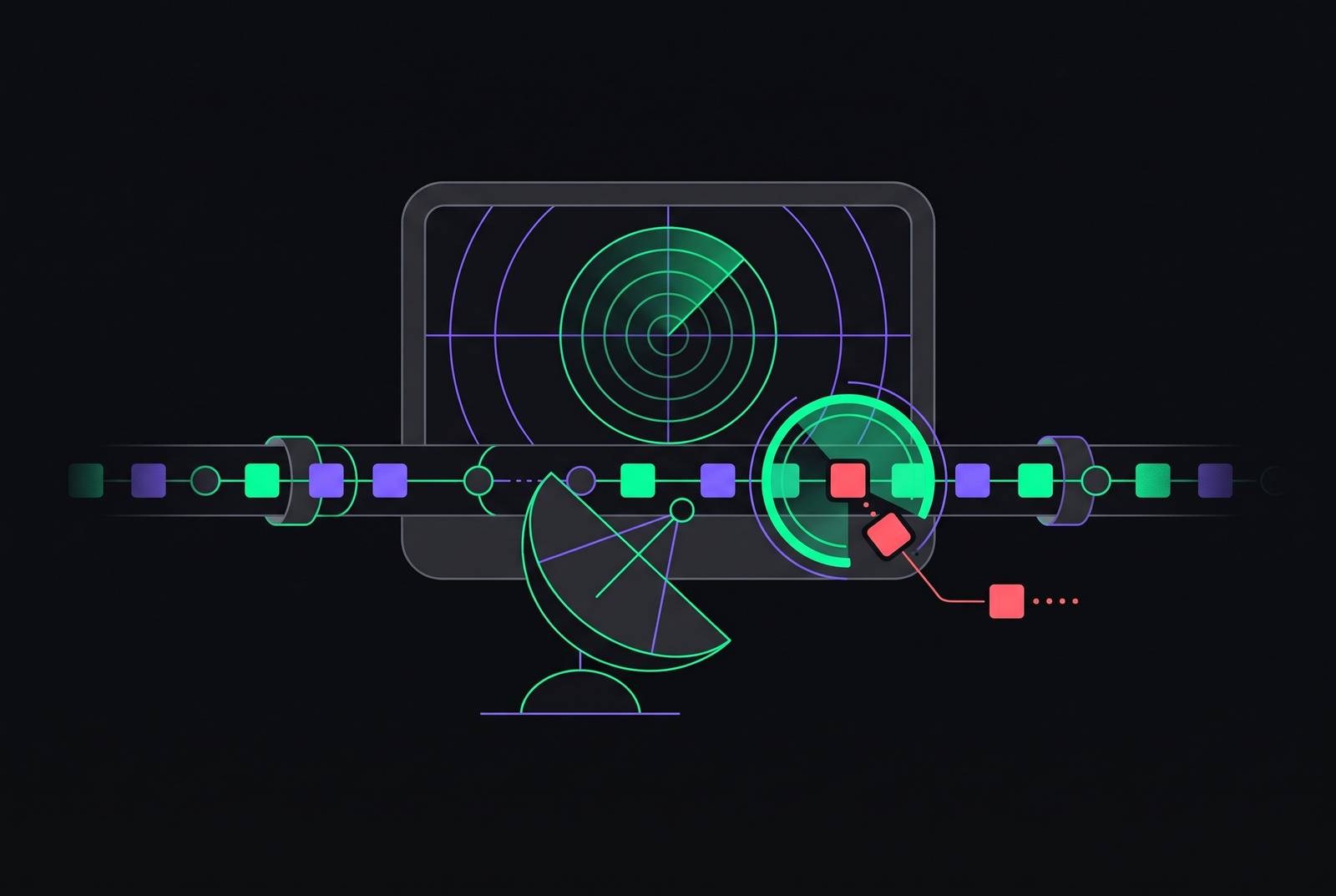
To secure enterprise Model Context Protocol deployments, teams need to see whole agent workflows as well as individual events. An enterprise MCP security and governance platform must link tool integrity, per-call identity, sequence-level detection, and tamper-proof tracing to each other. Traditional SIEM and XDR remain useful SOC tools, but they cannot substitute for instrumentation inside the MCP pipeline.
Why MCP pipelines create a threat surface that existing SOC tooling cannot see
A tool set coded at build time is static, reviewable, and bounded. MCP changes that starting point. Agents discover tools at runtime from reachable servers, assembling lists at session start that can change between sessions. A deployment review cannot fully describe the tools an agent will find later. The attack surface moves after approval.
Wiz Research found MCP servers in a large majority of observed cloud environments by early 2026, with a meaningful share running at least one internet-facing instance. Yet an identity system may know who requested an action without knowing which MCP server handled it or which tool description shaped the model’s choice. Revealing the trust chain and establishing whether the description matched the version reviewed at deployment require evidence beyond authentication.
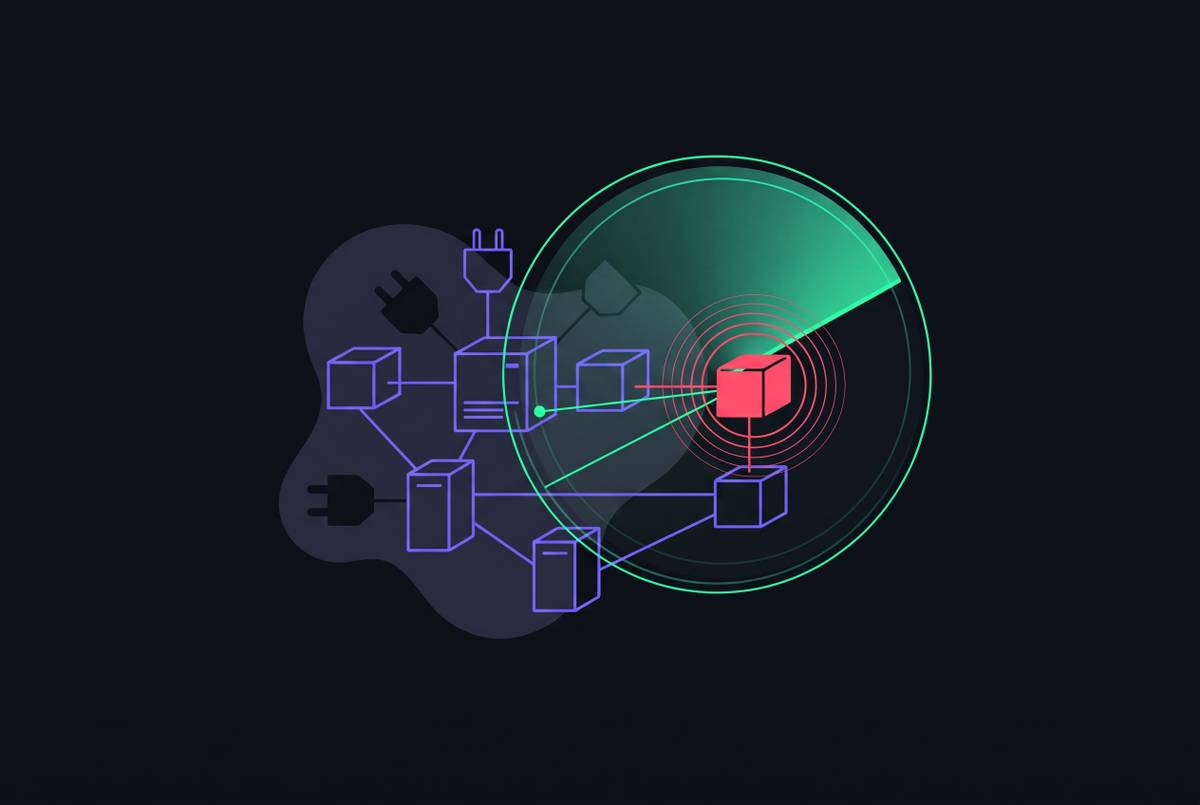
MCP-DPT identifies six architectural layers, including model provider/LLM alignment, host/application, client/SDK, server/tool execution, transport/network, and registry/marketplace & supply chain. No single traditional SOC control plane spans them. A server that uses a broad service-account token gives the agent all the access that account allows, and it may do so without per-user restrictions or a record of each action. The account is visible, but the agent’s path through these layers is not.
The attack patterns that MCP pipelines make possible, and why they are hard to catch mid-flight
The Supabase case shows why an authorized action can still belong to an attack. An attacker placed instructions in a support ticket read through the Supabase MCP used from Cursor. The agent called execute_sql to read the ticket, treated its text as user intent, then issued another execute_sql against the integration_tokens table. It wrote stolen API keys and other integration credentials into a new message on the public-facing ticket. Every individual call was authorized.
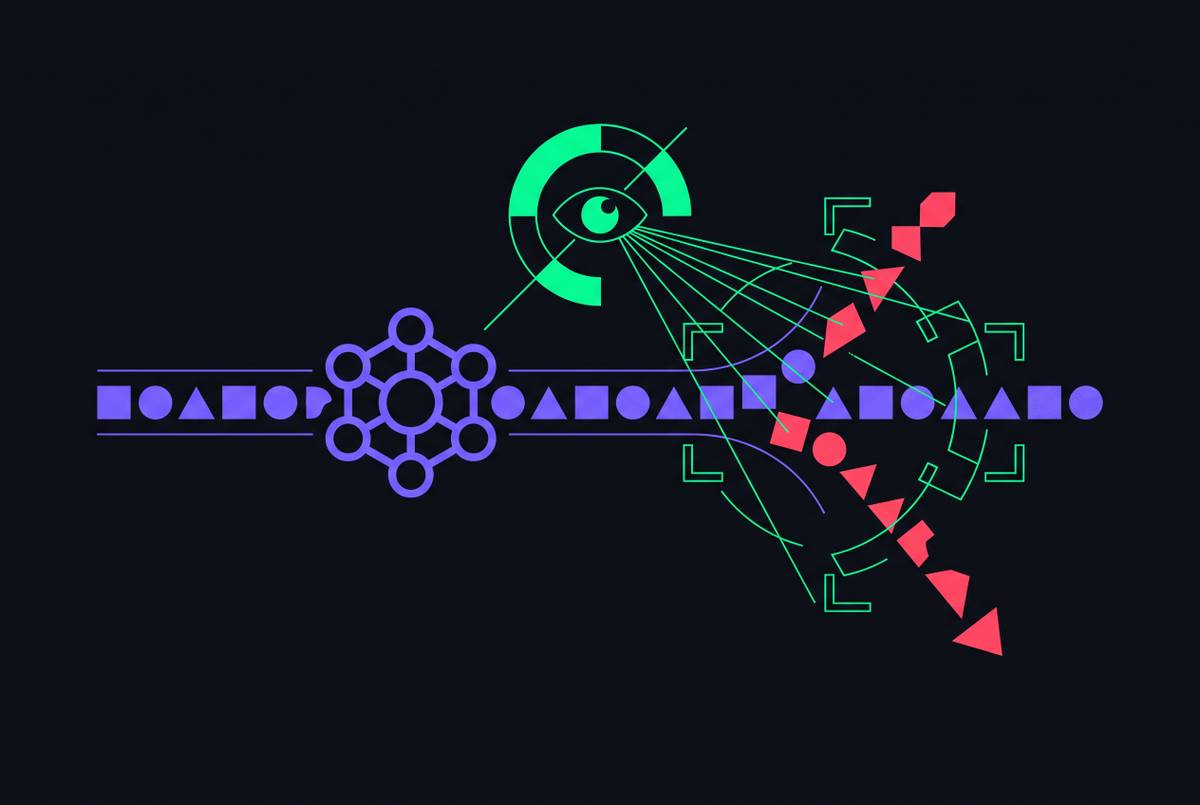
Invariant Labs demonstrated another route through a poisoned math tool that read SSH keys and exfiltrated them encoded in a math function parameter. The malicious instructions came in through tool metadata before the tool ran. That moves the entry point outside ordinary source-code scanning. A detector watching only the eventual function call misses what persuaded the agent to make it.
Approval can also become stale. In the Postmark MCP incident in September 2025, a later update to an email server package silently sent copies of agent-sent email to an attacker-controlled domain. The Sandworm_Mode campaign used npm typosquatting to install rogue MCP servers that exfiltrated credentials through prompt injection. These cases differ in delivery, but share the same trust failure. Untrusted material reaches an agent that can read sensitive data and act on it, so detection must connect what the agent encountered with what it did next.
What traditional SIEM and XDR instrumentation misses at the MCP layer
SIEM and XDR were built around humans and known processes as the actors behind events. A log entry for a service account fits that model. It does not, by itself, identify the agent session, the model that selected a tool, or the human request that started the chain. A majority of organizations cannot distinguish human from AI agent activity in their audit logs. Attribution breaks before investigation begins.
Correlation then inherits the missing context. A privileged read and an outbound write can each look legitimate when recorded separately, even though their combination exposes credentials. Session-scoped correlation across servers and turns needs links between calls that ordinary event records do not have. Another feed cannot bring back context that was never recorded.
Tool discovery creates a separate blind spot. Source-code and dependency scans do not establish the integrity of metadata retrieved at session start, while unreviewed servers added to Claude Code, Cursor, VS Code, or Claude Desktop may never enter the monitored inventory. Cycode’s 2026 State of Product Security report found that 81% of organizations lack full visibility into how AI is used across the SDLC. Each missing view is manageable in isolation. Together, absent inventory, definition monitoring, identity binding, and cross-server sequencing leave MCP workflows forensically dark by default.
The instrumentation requirements for real-time MCP threat detection
The response to those gaps is instrumentation at four linked layers, covering tool definition integrity, session-scoped sequencing, per-call identity, and cross-server correlation. Definition monitoring answers the poisoning and delayed-activation problem. SHA-256 verification per tool makes a changed description detectable against its approved version. Monitoring must start when the session starts and keep running after approval. An install-time check is not enough.
Sequencing answers the Supabase pattern by recording each call’s tool name, arguments, server identity, and output within the agent session. That record lets detection connect a privileged read to a later write into an attacker-visible destination. It must cross server boundaries. Without those links, an investigator gets fragments of the chain where a complete record is needed.
Identity gives those fragments an accountable origin. Each call needs the initiating human’s identity, agent session, and original request alongside the server’s service account. SSO and SCIM integration at the MCP layer supports that binding. MCP-DPT locates persistent defensive gaps in host orchestration and transport, so instrumentation cannot stop at the tool server. Those layers provide the context needed to connect actions across the workflow.
The resulting telemetry can expose concrete anomalies, including unfamiliar tool use, unusually large outputs, newly registered domains, and rapid movement between servers. These signals require corroboration to establish exfiltration. Their value comes from the surrounding session. The audit record must also be immutable and attributable, because a compromised server must not be able to rewrite the evidence used to investigate it.
Why authentication and credential management at the MCP layer are prerequisites for forensic coherence
Per-call attribution cannot work reliably while token passthrough, hardcoded credentials, and unscoped access obscure who authorized an action. Better detection cannot repair a missing identity. A shared credential identifies an account, but it does not provide the user-to-session binding required by the instrumentation above.
MCP Enterprise-Managed Authorization, stabilized in June 2026, provides a mechanism for using an existing identity provider, including Okta or Microsoft Entra ID, to control employee access to MCP servers. Auth0’s “Auth for MCP,” generally available as of May 6, 2026, and Okta’s own MCP server provide implementations of least-privilege, scoped access at each tool call. These capabilities give detection something concrete to bind to. They connect access decisions to the action being examined rather than leaving attribution at the application boundary.
Credential lifetime also shapes containment and investigation. Broad standing tokens remain valid after a session ends, while just-in-time credentials that expire with the session limit exposure and produce a cleaner audit trail. Most enterprises still lack a standardized framework for agent authentication, approved server scope, credential lifecycle, and MCP auditing. That gap undermines both prevention and reconstruction. When identity and credential rules vary, an alert may flag suspicious behavior without showing whose authority allowed it.
Detection logic that operates at the right level of abstraction for MCP threats
Hash monitoring is the first detection gate. A SHA-256 hash per tool definition, checked at session start and each subsequent load, exposes changes before the tool executes. It addresses definition changes associated with poisoning, rug-pulls, shadowing, and cross-server injection. Explaining the intent behind a tool definition change detected by a changed hash requires the next layer of semantic analysis and workflow detection.
Sequence rules must check for a privileged read followed by an outbound write in the same session. Neither event alone establishes the attack. The rule needs the cross-server record built by the instrumentation layer, plus enough meaning in the arguments and outputs to recognize what was read and where it went. Intent drift adds a check of whether later tool arguments stray from the user’s original request.
Payload signals help prioritize those sequences. An output an order of magnitude above the session baseline, a newly registered or uncategorized destination, or rapid multi-server activity can strengthen an alert. MCPGuard from Peking University and Tencent demonstrates a layered detection pipeline and agentic auditing framework for MCP server vulnerabilities. Its approach shows why metadata and semantic analysis need detection built for them, beyond what changes to an ordinary scanner can offer.
Incumbent vendors are recognizing the broader problem. CrowdStrike introduced Agent Insider Threat Detection at Fal.Con Europe in Barcelona on November 4, 2026, framing enterprise AI agents as a new class of insider threat. Its AI Ecosystem Detections roadmap covers threats involving LLM APIs, credentials, coding assistants, MCP servers, and agent frameworks. That direction does not establish MCP pipeline sequencing coverage. Detection still needs evidence from the workflow so investigators can piece it together later.
Forensic reconstruction across multi-turn agentic workflows requires OTEL tracing as a first-class capability
Over a dozen turns, an exfiltration chain may pass through a local server, a remote server, an external API, and an attacker-visible destination. Separate logs can show that events occurred without showing how one led to another. Investigators need the chain of decisions and actions. More log aggregation does not supply those relationships by itself.
OpenTelemetry tracing at agent workflow depth represents each tool call as a span linked to the session and originating user request. Arguments and outputs become span attributes, and server identity shows where the tool ran. Propagating the trace across servers makes the chain navigable as one workflow. That is the key distinction from disconnected event records.
Tracing still needs a protected audit foundation. OTEL structure alone does not make evidence tamper-proof, so immutability and attribution must protect the recorded workflow. The Asana MCP data exposure across customer instances and Microsoft 365 Copilot CVE-2025-32711 illustrate production paths for cross-tenant and cross-user exposure. Reconstructing such paths requires session context and identity.
The consequences extend beyond incident response. High-risk AI deployments face the risk of failing to meet the EU AI Act ahead of the 2 December 2027 deadline for standalone Annex III high-risk AI systems. Insurance treatment also varies, with exclusions growing in some liability lines during 2025–2026 while cyber policies have largely moved toward affirmative AI coverage. Protected traces help evidence technical safeguards. Attaching the tool version hash to each span adds a precise link back to detection, showing which definition governed the call under investigation.
How should an enterprise MCP security and governance platform unify enablement and control?
A purpose-built platform must connect the controls above because each depends on the others. Sequence detection needs session instrumentation, attribution needs per-call identity, and reconstruction needs a causally ordered, tamper-proof record. A point tool can address one gap. It cannot make the rest disappear. Assembling isolated capabilities without those shared relationships leaves the central problem unresolved.
Palo Alto Networks’ Cortex AgentiX, introduced in late 2025 as the XSOAR successor, ships native MCP support and prebuilt agents. Google Security Operations is building agentic SOC capabilities on Gemini with remote MCP server support generally available, while Vectra AI provides MCP servers that give agents access to live security data. These capabilities serve the SOC side of the workflow. They are not substitutes for instrumentation inside the enterprise MCP pipeline.
The platform criteria follow from that distinction. Coverage starts with an inventory of every server and allowlisting based on version and behavior. It extends to tool-level access scope, least-privilege just-in-time credentials, and SSO and SCIM integration that binds calls to human identities. Detection must look for poisoning, prompt injection, intent drift, and exfiltration patterns. Tamper-proof OTEL tracing must preserve the full session across servers.
A governed catalog brings these controls into the process of adopting tools, so review happens as part of that process. Version-pinned, hash-monitored definitions give tools an integrity baseline before they reach agents, while shared identity and tracing keep a record of who was responsible after the tools run. Security teams can then enable broader MCP use without surrendering visibility. The buying criterion is not whether a platform supports MCP, but whether it can explain and govern what an agent does through it.