Network Traffic Fingerprinting Techniques That Expose Shadow MCP Servers Before They Escalate
Network traffic patterns reveal hidden MCP servers before they become security threats.
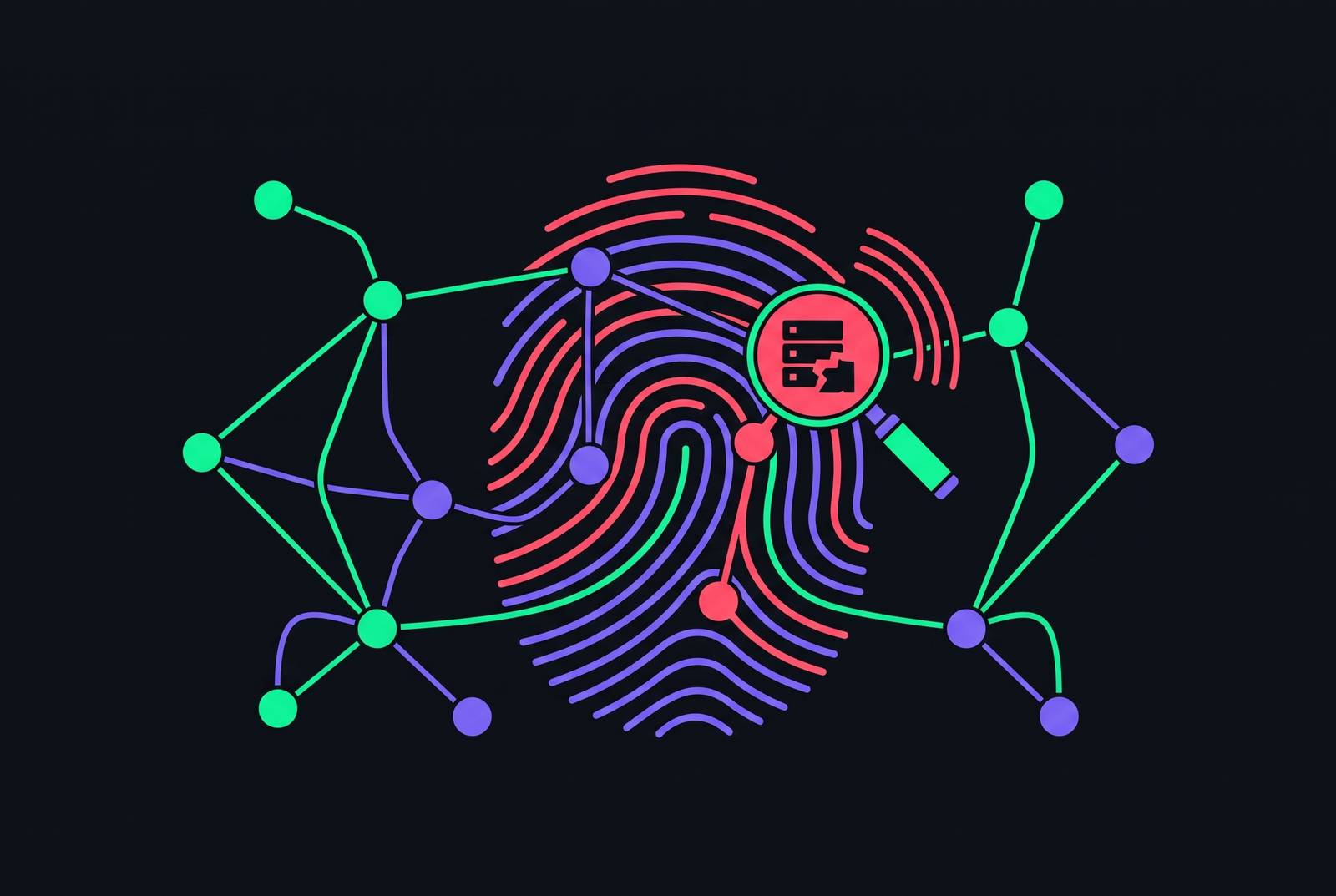
Shadow MCP usage detection is an engineering problem. Enterprise security teams can expose unauthorized AI tool connections by combining network traffic fingerprints, scoped endpoint probes, tool-definition comparisons, and credential-flow monitoring. Connecting those signals to enterprise identities shows who is using the servers, while tool-call policy enforcement and removal or isolation of unvetted deployments turn discovery into remediation.
Why shadow MCP servers are structurally invisible to traditional monitoring
A successful user login says little about what an AI agent can reach afterward. Shadow Model Context Protocol servers use ordinary user authentication flows, so conventional logs can record the sign-in without showing the tools and permissions behind it. Authentication is not a map of agent access. Without added controls, a server can use the permissions it gets without a check of each agent request.
That gap makes shadow MCP more dangerous than shadow SaaS. An unapproved SaaS application creates a data transfer risk, while an MCP server with file system, code execution, or internal API access can also modify files, run commands, or trigger production operations. The NSA/CISA CSI on MCP Security identifies this interaction inversion as a core design risk, because servers query and execute actions for connected clients through paths that are poorly traced. OWASP classifies Shadow MCP Servers as MCP09 in its MCP Top 10 framework. Network-layer detection fills the gap between a recorded login and those downstream actions.
What the network traffic of a shadow MCP server actually looks like
MCP traffic travels inside ordinary encrypted connections, but its application messages have recognizable features. A protocol version header can identify MCP where a monitoring point can read that header. Encryption limits what a passive sensor can see. Cloudflare cautions that MCP requests can lack the header, so its presence provides a positive signal with limited coverage.
Where there is application-layer visibility, JSON-RPC messages show tool discovery through tools/list and the structured tool calls that follow. Their sequencing and payload shape help distinguish them from ordinary API traffic. Flow logs show another side of the traffic, with burst intervals, inter-call timing, and parallel invocations. Those patterns can show that callers are automated without showing what is in their messages. They do not, by themselves, establish whether a server is approved.
Credential and metadata changes add stronger clues. Shadow servers can inherit credentials from ~/.env or cloud credentials files, producing outbound requests with long-lived tokens or API keys. Token-aware inspection can expose their reuse across sessions. Tool metadata can also change after an initially normal sequence of calls. The Deadbugz campaign made that delayed change a concrete detection target.
Passive fingerprinting: reading shadow MCP signals from live traffic without probing
Passive fingerprinting reads traffic that is already there without contacting the suspected server. It suits continuous monitoring because it introduces no probe traffic that could disrupt production or alert an adversary. TCP/IP fields are a place to start, with TTL values, window sizes, and flag sequences. These describe the underlying network stack and runtime environment. They are tentative clues to MCP use.
TLS handshakes add another layer through cipher suite ordering, extension presence, and session ticket behavior. These details can help fingerprint the framework behind an encrypted connection, while the timing and amount of traffic show patterns of automated requests. Combining them narrows the candidate set. A single header profile cannot reliably distinguish an MCP server from another service using a similar runtime.
Exposed by Design: A Dynamic Security Assessment of Internet-Facing MCP Servers at Scale combined eleven sources, including crt.sh, npm, PyPI, Smithery, GitHub, HuggingFace, Censys, FOFA, Shodan, glama.ai, and pulsemcp.com. Certificate transparency discovery requires no network access to the target. These sources can surface candidates that local traffic monitoring has not encountered.
For servers already in use, tool descriptions provide a more direct fingerprint. Comparing a cached tools/list response with later responses exposes post-approval definition changes. UltraViolet Cyber recommends tool description fingerprinting at the proxy layer so that changes are detected, logged, and blocked before reaching the agent. This is an immediately deployable passive control where the proxy can inspect tool messages.
Active fingerprinting: probing suspected MCP endpoints to confirm and classify them
Active fingerprinting sends crafted requests and examines the response. It can confirm passive findings and find servers that are idle between agent sessions. Banner grabbing and JSON-RPC capability negotiation can reveal an MCP implementation, its SDK version, and its authentication posture. Transport classification distinguishes HTTP/SSE and Streamable HTTP deployments from local stdio integrations, although a network port scan alone does not inventory local stdio servers.
The study found that a large majority of confirmed production servers responded without authentication. A valid JSON-RPC response without credentials establishes reachable unauthenticated behavior. Establishing organizational approval status requires comparison with the enterprise inventory and policy.
Path analysis can help with placement and triage. TTL-based analysis and ICMP probes can distinguish short, variable paths associated with developer machines from stable datacenter paths. Differential scanning adds the time dimension. The study found that servers disappeared within days, so a single scan gives an incomplete inventory that will not stay up to date.
Active testing needs clear permission and limits on what can be tested. Probes can disrupt production, trigger rate limits, or generate security alerts. CVE-2026-67357 in ArcadeDB MCP illustrates a further risk, because an authenticated settings-tool request can expose a cluster token in cleartext. Capability enumeration is therefore both an auditor technique and an attacker technique. Scheduled validation must account for the sensitivity of the tools it invokes.
Attack patterns that fingerprinting must catch: tool poisoning, rug pulls, and supply chain injection
The State of MCP Security 2026 report describes how tool descriptions enter an agent’s context as trusted content, where hostile instructions can change what the agent does. Auto-approval removes a human review opportunity. For post-registration poisoning, the detection signal is a hash mismatch between the captured tools/list definition and the definition returned later. An unchanged malicious description, however, will not create that mismatch.
Deadbugz offered text formatting and summarization, then changed its metadata after exactly three tool calls. The replacement instructions sought SSH keys, AWS credentials, shell history, and Kubernetes config while concealing the activity. Its fingerprint was cadence-triggered metadata drift. The campaign also filed 23 pull requests across unrelated AI and developer tool projects in 74 minutes, creating a separate rate anomaly in repository event logs.
Server-side request forgery exposes a different traffic pattern. CVE-2026-19956 affected facebook-ads-mcp-server, while BlueRock Security showed how MCP tools could drive requests from the server’s network position and retrieve IAM credentials. The signal is outbound traffic toward RFC-1918 addresses, link-local ranges such as 169.254.x.x, or the cloud metadata endpoint 169.254.169.254. Destination policy supplies the necessary context. Internal API access can be legitimate, so a private address alone is not proof of exploitation.
Repository-based injection can send credentials out before consent is given. CVE-2026-21852 involved an attacker-controlled repository setting ANTHROPIC_BASE_URL to an attacker endpoint, causing API requests before the trust prompt appeared. No filesystem read was needed to leak the key. The detection signal is API key material in outbound HTTP headers to non-canonical Anthropic endpoints, visible at an egress proxy with header inspection.
Authentication and credential anomalies as fingerprinting signals
Aembit describes how agents and servers use static API keys or long-lived tokens kept in configuration files or CI/CD pipelines. Repeated authentication values across sessions expose that persistence. Tokens without expiration metadata are another clue, though token format alone cannot show how long they actually last. The study found that 91.8% of the servers it assessed lacked OAuth authentication, though some of those servers could have had other forms of authentication.
When an orchestrator passes one agent’s token to another without revalidating scope, token inspection can reveal an audience claim that does not match the receiving service. Shared secrets leave another recognizable pattern. When the same credential appears across multiple source IPs or developer machines, it suggests that access is shared and static. CVE-2026-73498 in sooperset mcp-atlassian illustrates the exposure behind this signal, because path traversal through a tool parameter can disclose credentials and environment variables to an authenticated client.
A valid token still leaves questions about authority. The arXiv paper on agent identity, AIP, notes that standard OAuth flows authenticate the final hop without recording the full authorization chain. Finding an unauthorized upstream delegation thus needs call-chain tracing as well as final-token inspection. Ephemeral credentialing provides the forward-looking baseline, with credentials issued for this agent, task, and run. Reuse across sessions, excessive scope, or credentials outliving the session deviate from that baseline.
How do enterprise security teams find unauthorized MCP use and stop repeat deployments?
Continuous network flow analysis, certificate transparency polling, and egress inspection show what the traffic baseline is. Scheduled differential scans find new or port-migrated servers that ambient traffic misses. Runtime monitoring then compares tool definitions on reconnect, examines cadence-triggered changes, and tracks credential lifetimes against agent sessions. Each layer covers a different blind spot.
Triage needs separate labels for separate problems. The NSA/CISA guidance identifies unauthenticated servers, vulnerable servers, unauthorized deployments, and services with open traffic paths. These categories prevent an exposed endpoint from being treated automatically as an unapproved one. They also make remediation more precise, because lack of authentication and lack of organizational approval are different findings.
Attribution turns a server finding into an answer about employee use. Tamper-proof audit logs and full OpenTelemetry tracing connect the agent action to its tool call, session, user identity, and credential. SSO and SCIM integration link activity to verified enterprise identities, and details about the device and session fill out the investigation. An IP address alone does not answer who authorized an action. Without that chain, security teams can discover traffic but still struggle to explain it.
Every request should be authenticated, every tool scoped, every input validated, and every call logged. Tool-call policy can block connections that bypass an approved portal, enforce outbound destination allow lists, and rate-limit invocations. Protocol-header detection can support routing enforcement where the gateway can read it, but missing headers cannot grant a clean bill of health. These controls can automatically prevent problems that keep turning up, so teams have less to clean up by hand.
What governance frameworks require and where detection programs fall short without them
Detection alone does not establish governance. OWASP MCP Top 10, NIST’s AI Agent Standards Initiative, and sector-specific compliance regimes place detection within broader expectations for attribution, documentation, and enforcement. An inventory without an owner or approval status leaves decisions unresolved. Fingerprinting gives teams the evidence for those decisions, but policy sets what is allowed.
OWASP MCP09 calls for a full MCP server inventory, classification as local or remote, and removal or isolation of unvetted deployments. UltraViolet’s advisory also recommends version pinning, signed tool definitions, continuous dependency monitoring, and quarterly red-team exercises targeting agentic AI workflows. Each depends on knowing which servers and definitions are actually in use. A review at registration cannot show that what a server does later is still approved.
Regulated data raises the cost of missing that change. Shadow MCP access to cardholder data under PCI DSS, HIPAA-covered health records, or personal data under GDPR creates exposure like other unapproved data flows. The difference is often delayed discovery. Traffic and identity evidence make that exposure visible before an audit or incident forces the question, while documented enforcement shows what the organization did about it.
Good governance gives developers an approved way to use AI tools, so security teams do not have to chase each deployment afterward. Early discovery, attributable actions, and tool-call controls make that route defensible. Fingerprinting is the precondition for trust. Organizations that can see their MCP surface can govern it. Organizations that cannot are running on hope.