AI Governance Policy Templates for Enterprise Rollouts
Existing policies miss the operational risks agents create through tool access and permissions.
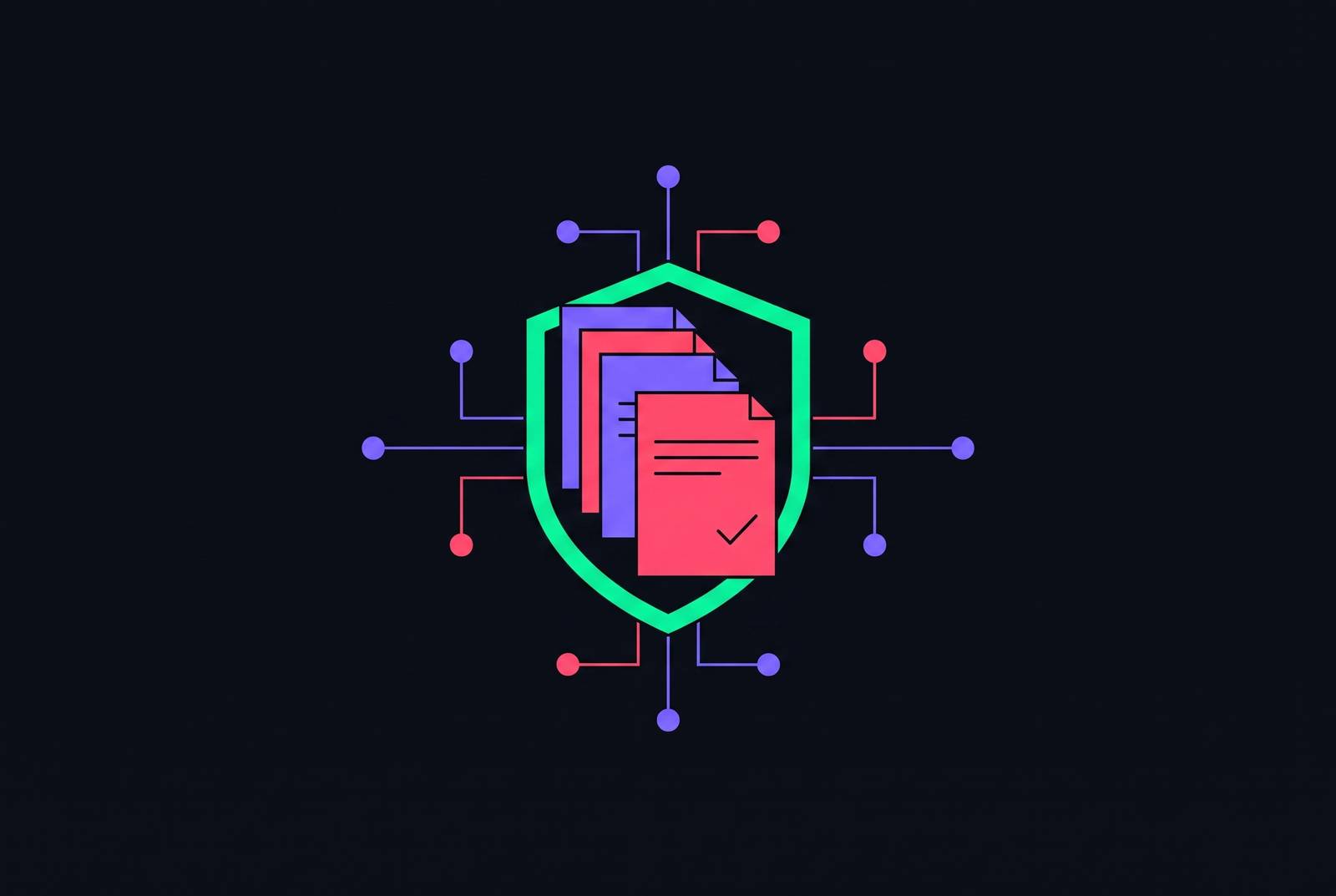
Most enterprise AI governance policies were written for a system that answers questions, not one that takes action. An LLM that drafts an email or summarizes a document creates reputational risk at worst. An agent that can log into a database, move money, push code, or message a customer creates operational risk, and operational risk needs a different kind of policy.
The frameworks most companies have actually implemented, NIST AI RMF 1.0 and ISO/IEC 42001 among them, along with the corporate templates built on top of them, were designed around model risk. They ask whether a model is biased, whether its outputs are explainable, whether its training data was sourced responsibly. Supplementary agentic profiles, like NIST's AI 100-5, have started to close that gap on paper. But they remain add-ons layered onto frameworks most organizations adopted years before agents existed, and the base document, not the supplement, is still what most compliance teams point to when asked whether they have a policy.
The documentation looks complete, but the controls stop at the model's output. A policy that doesn't name the specific points where an agent can act outside its intended scope, pull a credential it shouldn't have, or chain into a tool nobody approved is recording a risk that no longer matches how the technology works.
What MCP did to the enterprise attack surface
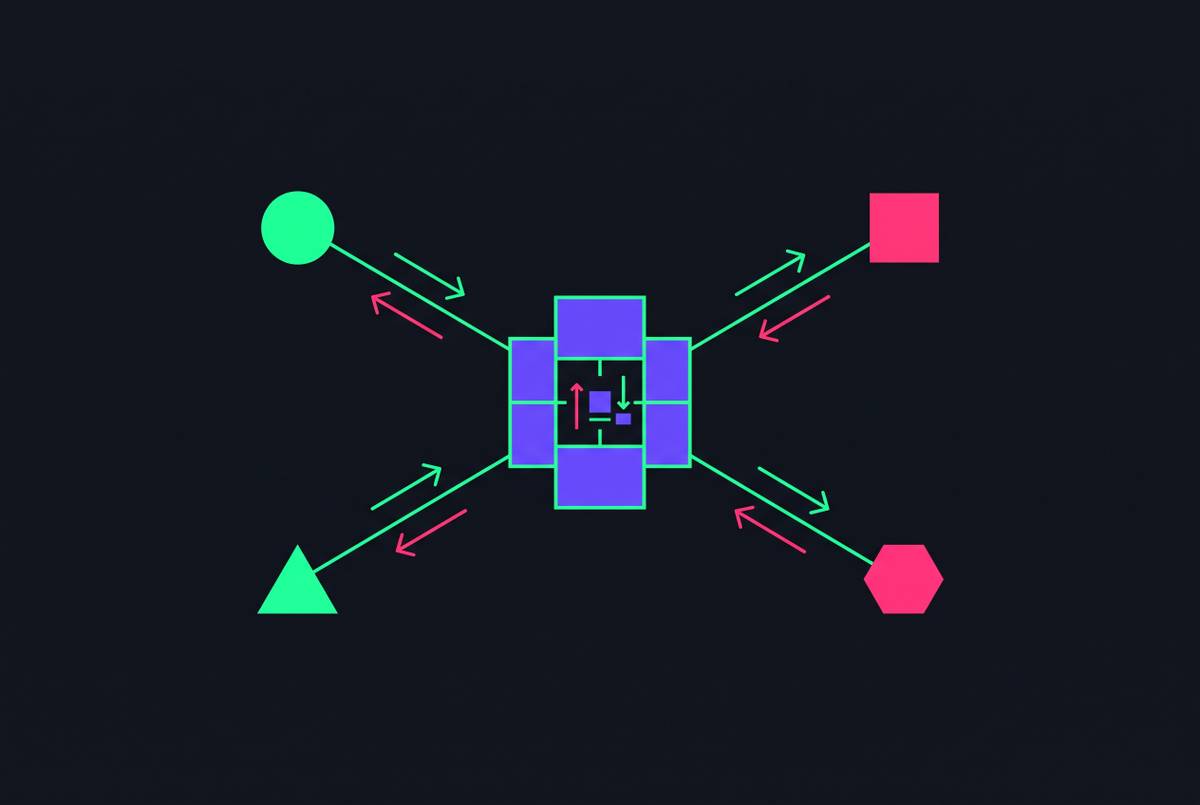
The Model Context Protocol (MCP) gave AI agents a standard way to plug into company tools: file systems, databases, Slack, GitHub, payment systems, anything with an interface [1][2][3]. That standardization is why it matters for governance. One protocol lets one agent connect to a thousand different tools, but that also means every enterprise running MCP has built the same shape of attack surface. A July 2025 internet scan identified at least 1,862 publicly accessible MCP instances responding to unauthenticated requests, the Cloud Security Alliance found.
The protocol's STDIO transport executes operating system commands without sanitizing or validating them first. Remediation sits with the enterprises running it, not with a future patch.
OWASP's MCP Top 10 project has since formalized the threat categories this creates, including tool poisoning, command injection, and shadow MCP servers. Tool poisoning sits at the center of active exploitation. The tool descriptions a model reads to decide how to use a connector are rarely shown to the human user at runtime, so an attacker can bury instructions inside that description telling the agent to exfiltrate data or suppress any notification of what it just did. Independent benchmarking found that even the model with the strongest refusal behavior still complied with poisoned instructions more than a third of the time.
Cross-server shadowing compounds the damage. MCP made the attack surface uniform, which is also what makes a single governance control, applied consistently, able to close most of it.
Where Governance Controls Had to Stop the Damage
The 2026 incident record makes the abstract threat concrete. Supply chain compromise, not a sophisticated novel attack, has been the primary entry vector, and in each confirmed case, a specific governance control was absent and its absence is what let the incident succeed.
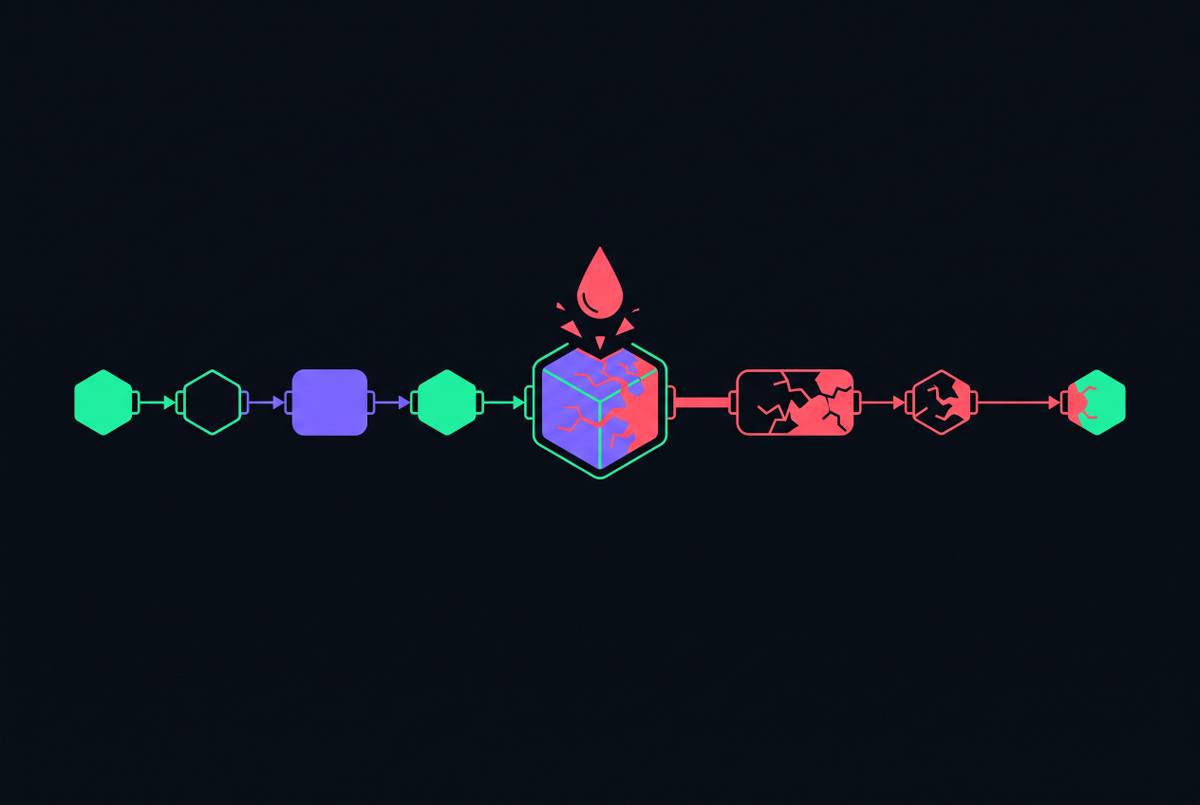
Check Point Research disclosed remote code execution in Claude Code achieved through poisoned repository configuration files, exploiting hooks, MCP servers, and environment variables defined inside the repo itself. A tool registry with approval workflows, checking configuration changes before they reach a production agent, would have interrupted that chain before execution. Trend Micro found 492 MCP servers exposed to the internet with no client authentication and no traffic encryption, meaning anyone who found the address had the access.
The Azure DevOps MCP authentication bypass, tracked as CVE-2026-32211 with a CVSS score of 9.1, let attackers pull configuration details, API keys, and authentication tokens without presenting valid credentials. Wiz Research found two flaws in the Amazon Q VS Code extension: a malicious repository could achieve arbitrary code execution and steal cloud credentials, simply because a developer opened that repository. The spawned MCP server process inherited the developer's full environment, so the exploit led straight to cloud infrastructure access.
None of these incidents were stopped, or could have been stopped, by a model behaving more carefully. Each one required a governance-level control that either didn't exist or wasn't enforced: a registry that tracks every tool an agent can reach, identity tied to every action an agent takes, and credentials scoped to the smallest task they need to perform.
The over-permissioning and shadow-agent problem that most policy templates don't acknowledge
Most enterprises don't start from zero agents. They start from agents already running, many with far more access than their job requires, and a meaningful number running without security's knowledge. A policy built only to govern future approvals addresses a fraction of the actual exposure, because the agents already in production are where the damage, if it comes, will come from.
Survey data backs up what the incident record already shows: a meaningful majority of deployed agents are over-permissioned, holding privileges well beyond what their assigned task needs, and a large share of enterprises have discovered AI agents operating on their networks that nobody formally approved. A developer can stand up an MCP server against a production database in an afternoon, with no ticket, no review, and no sign-off. Once another agent discovers that server, its tools become part of that agent's available actions, with no record of it on any approval log.
The authentication gap makes this worse. A server stood up quickly, without that authentication, is reachable by anything that finds it.
A policy that treats agent governance as an approval gate for new deployments has already missed most of the risk. The template has to start with discovery: an inventory of every agent and every MCP server already running, what they connect to, and what they can do. Blast radius, when something goes wrong, is set by the permissions an agent already holds, not by the permissions a new policy would have assigned it going forward.
The regulatory deadlines that make governance a legal obligation, not just a best practice
Regulatory exposure for agentic AI deployments has stopped being a future consideration. Enforcement timelines are already running, and the compliance boundary reaches every agent performing a high-risk function, not just the model sitting behind it.
August 2, 2026 is the date the EU AI Act's enforcement and penalty powers over general-purpose AI model providers became applicable. Fines reach up to a percentage of global annual turnover or €15 million, whichever is higher. The Act's recitals specifically address multi-agent architectures, and secondary commentary on the regulation suggests the compliance boundary extends through an entire chain of agents, covering every agent in that chain that performs a high-risk function, not only the final step a human sees.
SOC 2 auditors have already built AI agent controls into their review process. Any organization facing a Type II audit now needs agent governance that is documented and demonstrable to an outside reviewer, not simply asserted internally.
That changes what a policy template has to include at a structural level. It needs a defined review cycle on a fixed schedule, documented rules for what data an agent may touch, and audit trails built to satisfy someone outside the company who is checking the work, not just internal visibility for a security team that already trusts itself.
The eleven sections every enterprise AI governance policy must contain
A complete enterprise AI policy has eleven structural sections. Skipping any one of them leaves a gap. That gap becomes visible later, in an audit finding or an incident report.
Purpose and scope defines which systems, use cases, and people the policy governs, and it needs to be written broadly enough to capture shadow deployments, not only the tools that were formally approved. Definitions establish shared language for terms like "AI agent," "MCP server," "tool call," and "agentic workflow." Without that shared vocabulary, enforcement becomes a matter of interpretation, and interpretation is where accountability disappears.
Approved tools breaks into three categories: sanctioned tools approved for unrestricted use, conditionally approved tools allowed under documented constraints, and prohibited tools. Acceptable and prohibited use names the specific workflows agents may automate and states directly which actions are off-limits, covering autonomous actions and not just the content an agent generates.
Human oversight and accountability defines exactly where a human approval is required before an agent acts, and names who is accountable when an agent acts without that approval. Third-party AI and MCP vendor requirements demand that approved vendors operate under a contract that prohibits using company inputs, outputs, prompts, or metadata to train models without written consent. A consumer-grade opt-out checkbox is not a sufficient contractual commitment once non-public company data is involved.
Monitoring and enforcement specifies what gets logged, who reviews those logs, and what triggers an escalation. Review cycle sets a fixed schedule for revisiting the policy, triggered early by any significant incident or any material change to the agent estate.
Each of these sections traces back to a failure mode already documented above: unauthenticated MCP servers, poisoned tool descriptions, credentials sitting in config files, agents nobody inventoried. None of the eleven are filler.
The five agent-specific controls that go beyond a standard AI policy
A standard AI policy governs what employees do with AI tools. Agent-specific governance has to govern what agents do on their own, without a human approving each step, and that requires five controls that don't exist in a conventional AI use policy.
An agent registry is the foundation everything else depends on. Every agent in production needs to be registered with its owner, its approved tools, its data scope, and its permission level recorded against it. MCP tool descriptions can change after deployment, so registry entries need version history and change approval attached, and a re-approval trigger is what stops a conditionally approved tool from quietly turning into a poisoned one with no review in between.
Identity has to be tied to every single agent action. Each tool call needs to be attributable to the specific agent that made it, the human who invoked or authorized it, and any approver in the chain behind that. SSO and SCIM need to extend to agent identities the same way they already cover human users, because agents go through a lifecycle too: they get created, modified, and eventually decommissioned, and identity infrastructure has to handle each of those transitions the way it already handles an employee's onboarding and offboarding.
Permissions scoped only at the agent level aren't enough. A single agent can connect to dozens of MCP servers, and each tool call needs its own permission check against a defined policy, not a blanket grant covering everything that agent might ever touch. The blast-radius reduction that comes from moving away from standing credentials, toward scoped, task-specific permissions issued as short-lived tokens, is the operational standard a policy should require as the default, not the exception.
Credential handling needs to be a first-class requirement in the policy text itself, not an assumption left to engineering teams. Agent credentials must be time-limited, rotated automatically, and never stored in plaintext configuration files. The Claude Code and ClawHub incidents both involved credentials sitting in config files treated as permanent fixtures rather than temporary grants, and security research found that once exposed, AWS credentials were used against live APIs in under 90 seconds. OAuth 2.1 with just-in-time credential issuance is the standard a policy should name explicitly for any MCP server that connects to systems holding non-public data.
Audit trails need to hold up when someone outside the company is reviewing them. Logs need to be append-only and tamper-evident, attribute every action to both an agent and a human, and capture the tool calls and their inputs, not just a summary of the model's final output. Full OTEL tracing across agent and MCP boundaries is the mechanism that makes this possible: it reveals execution paths that a summary log would miss entirely, and it's necessary both for incident response after something goes wrong and for satisfying a regulator or auditor asking what happened.
A four-tier risk model for agent approval decisions
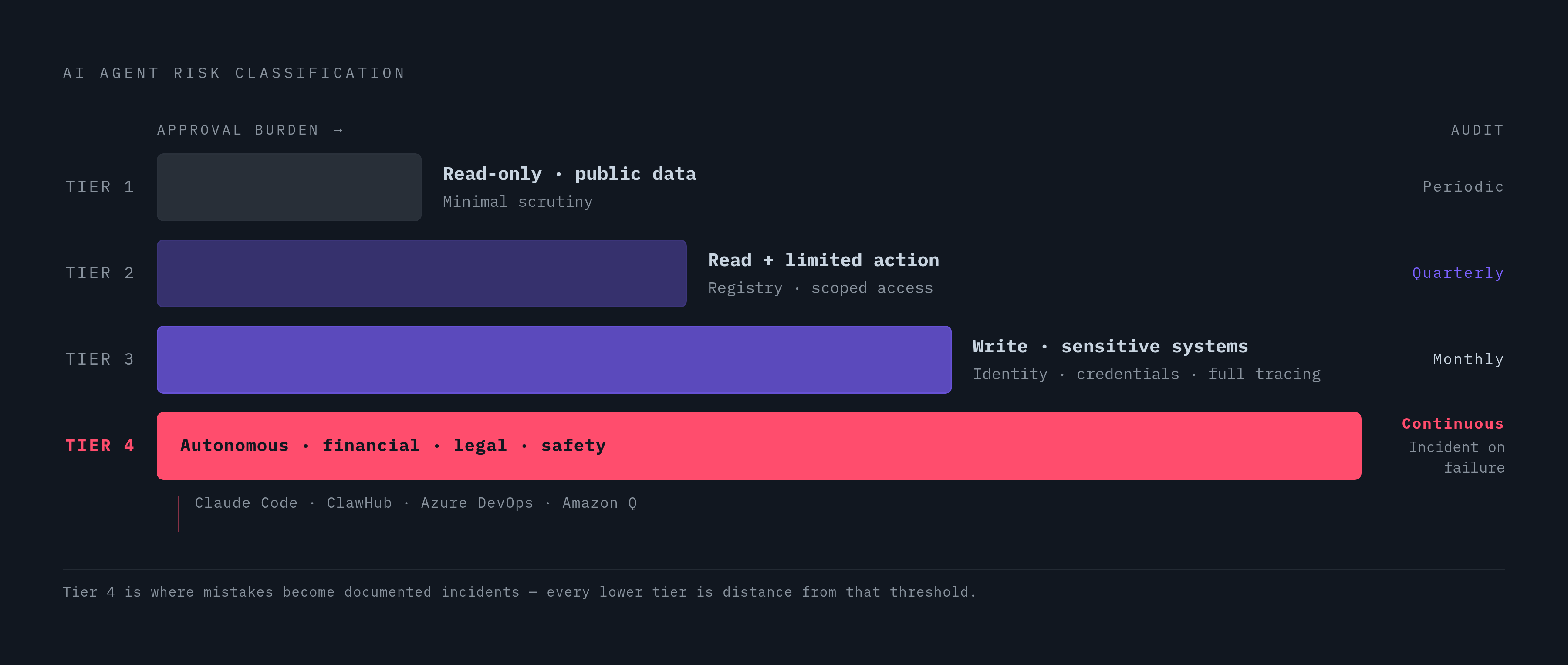
Not every agent carries the same risk, and a policy that applies one approval process to all of them either slows down low-risk work or waves through high-risk deployments under the same rubber stamp. A four-tier model sorts agents by what they're allowed to touch and what happens if they act outside that scope, and it assigns a different level of scrutiny to each tier before approval.
The lowest tier covers agents with read-only access to non-sensitive, already-public information, the kind of work that carries little exposure even if the agent makes a mistake. The third tier covers agents that can write, modify, or transmit data, or that touch systems holding sensitive or regulated information, and these need the full weight of the controls described above: registry entry, tied identity, scoped permissions, managed credentials, and full tracing before anything goes live. The highest tier covers agents that can take autonomous action with financial, legal, or safety consequences, the kind of agent a mistake could turn into an incident on the scale of the ones documented against Claude Code, ClawHub, Azure DevOps, or the Amazon Q extension.
Each tier should set its own requirement for human approval before deployment, its own audit frequency once running, and its own re-approval trigger when the agent's tools, data scope, or permissions change. An agent doesn't stay in one tier forever. The moment its scope expands, whether a new tool gets added or a new data source gets connected, it should be re-evaluated against the tier model before that expansion goes live, not after an incident forces the review.